
Morocco's Youth and Politics
Morocco’s young people are changing how political parties campaign, how citizens discuss public services and how political leaders respond to demands for accountability.
Their influence became particularly visible during the Gen Z-led demonstrations of 2025 and the parliamentary elections of September 2026.
Although many young Moroccans remain sceptical about traditional politics, their activism, digital communication, economic concerns and demands for institutional reform are forcing political parties to reconsider how they engage a generation that increasingly wants tangible results rather than promises.
The shift is important beyond Morocco. It reflects a broader African trend in which young citizens use social media, public demonstrations, community organising and electoral participation to demand better opportunities and more responsive government.
Morocco’s Youth Movement: What Changed?
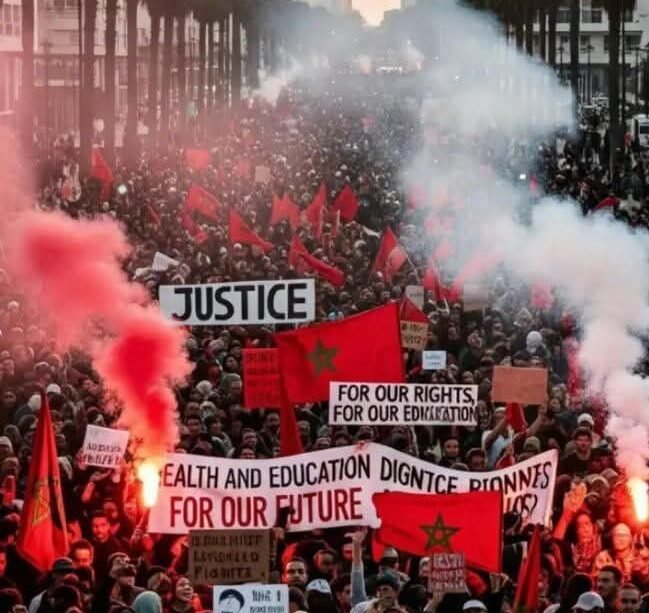
Morocco’s Gen Z movement, commonly associated with the name GenZ 212, gained visibility in September 2025 as young people mobilised around concerns about public healthcare, education, unemployment, living conditions and government priorities.
The demonstrations attracted attention because they connected everyday economic frustrations with wider questions about political accountability.
Young protesters did not simply demand more jobs. They also questioned the quality of public services, the allocation of public resources and whether political institutions adequately represented their interests.
Digital platforms played an important role in mobilisation.
Social media, online communities, messaging applications and short-form video helped young people share information, organise discussions and communicate grievances.
The movement also highlighted a generation that does not necessarily rely on established political parties, unions or traditional media to express its views.
What Are Young Moroccans Demanding?
Although young people are not a politically uniform group, several concerns repeatedly appear in public discussions.
| Issue | Why it matters to young people | Political implication |
|---|---|---|
| Employment | Difficulty finding stable, decent-paying work | Pressure for job creation and economic reforms |
| Education | Concerns about quality, access and opportunities | Demands for investment and improved public education |
| Healthcare | Unequal access and concerns about public services | Pressure for healthcare reform |
| Cost of living | Household expenses affect independence and opportunity | Demands for stronger economic policies |
| Accountability | Distrust of political promises and institutions | Greater scrutiny of political leadership |
| Representation | Young people feel excluded from decision-making | Pressure for younger candidates and meaningful participation |
| Regional inequality | Opportunities differ between urban centres and less-developed regions | Calls for more balanced development |
These demands are interconnected.
A graduate who cannot find employment may also struggle to afford housing, healthcare or the cost of starting a business. Consequently, young people’s frustrations cannot be addressed through a single policy announcement.
They want to see improvements that affect their everyday lives.
The 2025 Protests Changed the Political Conversation
The Gen Z protests brought youth concerns into the national conversation more forcefully. Demonstrations began in late September 2025 and spread across several cities, with young people using online networks to coordinate activity and communicate their demands.
Healthcare and education featured prominently, alongside employment, corruption concerns and questions about public spending.
The movement was notable for its digital organisation and its ability to draw attention to issues that young people felt established political structures were not addressing adequately.
However, demonstrations also encountered a difficult political and security environment, including arrests and legal consequences for some participants.
This created an additional challenge: how can young people participate in political change when they distrust the institutions they are expected to use?
That question continued to influence the debate surrounding the 2026 elections.
The 2026 Parliamentary Elections: A Test of Youth Engagement
Morocco held parliamentary elections on 23 September 2026 to elect the 395 members of the House of Representatives. The election became an important test of whether the energy associated with youth activism would translate into formal political participation.
The official electoral framework included 27 participating political parties and direct universal suffrage under a list-based electoral system.
However, the election exposed a significant gap between young people’s visibility in public debate and their representation within the registered electorate.
According to reporting published ahead of the election, voters aged 18 to 24 accounted for only around 4 percent of registered voters, while people aged 60 and above represented approximately 29 percent.
This imbalance matters because political parties often concentrate campaign resources on voters they believe are more likely to participate.
When young people remain underrepresented on electoral rolls or do not vote, their policy priorities may receive less attention.
The problem is not necessarily that young people lack political opinions. Rather, many question whether voting offers an effective route to change.
Why Youth Political Participation Remains Low
1. Distrust of Traditional Political Parties
Some young Moroccans believe political parties fail to communicate with them meaningfully.
Campaign promises may sound familiar, especially when employment, healthcare and education have remained persistent concerns.
A young voter who repeatedly hears promises of job creation without experiencing improvements may become increasingly sceptical.
Political parties must therefore demonstrate credibility through consistent engagement, realistic policies and measurable outcomes.
2. Economic Frustration
Economic insecurity can make political participation feel less urgent than immediate survival.
Young people who are unemployed, underemployed or struggling with living costs may prioritise finding income over registering to vote or attending political meetings.
Nevertheless, economic frustration can also motivate activism when individuals believe institutions are responsible for conditions they experience.
3. Limited Representation
Young people may feel that political leadership does not adequately reflect their experiences.
Even when parties nominate younger candidates, those candidates may struggle to secure funding, influential positions or opportunities to shape policy.
Representation is therefore not only about age.
It also involves whether young politicians can influence decisions, communicate with communities and challenge established political structures.
4. Questions About Political Influence
Morocco operates as a constitutional monarchy with elected institutions, but the monarchy retains a central role within the political system.
The constitutional framework gives Parliament legislative and oversight responsibilities, while the king has significant institutional powers.
This structure shapes how citizens understand the relationship between elections and political change.
For some young people, the question is not simply which party wins. They also want to understand how political decisions are made and how much influence elected representatives have over the issues affecting their lives.
How Young People Are Changing Political Campaigns
Political parties increasingly have to consider how they communicate with younger audiences.
Traditional campaign methods, such as rallies, posters and television appearances, remain important. However, digital platforms have changed how political messages circulate.
Young people can challenge campaign claims, share videos, discuss candidates and organise conversations without waiting for established media outlets to provide coverage.
Social media has become a political arena
Platforms such as TikTok, Instagram, Facebook, YouTube and messaging applications allow political discussions to reach audiences quickly.
A short video explaining a policy can reach thousands of people. A protest clip can attract international attention. A criticism of a public service can trigger discussions far beyond the original location.
However, digital engagement also creates challenges.
Political misinformation, manipulated videos, misleading statistics, harassment and polarisation can undermine constructive debate.
Political parties must therefore communicate clearly, provide verifiable information and avoid treating online popularity as a substitute for genuine public engagement.
Young candidates are entering the conversation
Some young activists are exploring political parties, electoral campaigns and civic organisations as ways to influence policy.
Others prefer independent activism, advocacy, community organising or issue-based campaigns.
This diversity matters.
Political participation does not always begin with a parliamentary seat. It can also involve organising a community, advocating for better schools, monitoring public spending, supporting local initiatives or educating citizens about their rights.
The challenge for Morocco’s political system is to create meaningful opportunities for young people across these different forms of engagement.
What the Election Results Revealed
The September 2026 parliamentary election recorded turnout of approximately 38.1 percent, according to International IDEA’s Democracy Tracker, marking a significant decline from the 50.9 per cent reported in 2021.
The lower turnout reinforced concerns about public confidence and political engagement.
The election also produced a new political configuration, with the Authenticity and Modernity Party emerging as the largest parliamentary party according to reporting on the results.
These developments matter because the next political cycle will begin under pressure to demonstrate that electoral participation can produce practical improvements.
A government cannot address youth distrust simply by winning an election.
It must show that public services improve, employment opportunities expand, economic pressures become more manageable and citizens can engage with institutions without feeling ignored.
Why the Next Election Cycle Could Be Different
Morocco’s youth movement is likely to influence political strategy beyond the 2026 parliamentary elections.
The next cycle may involve greater emphasis on:
Youth-focused policy
Political parties may develop more detailed employment, education, entrepreneurship and housing proposals.
Young voters are likely to scrutinise whether these policies include measurable commitments rather than broad promises.
Local politics
Municipal and local elections may become important opportunities for young activists to engage directly with community issues.
Local government decisions affect transport, sanitation, markets, public spaces, neighbourhood development and services that residents experience daily.
These issues can create practical entry points for political participation.
Digital accountability
Young citizens may increasingly use online platforms to question public officials, monitor campaign promises and share information about local challenges.
Political leaders will need to respond more consistently rather than relying exclusively on traditional communication channels.
Greater demand for transparency
Young people may expect clearer explanations of budgets, public projects, recruitment processes and government decisions.
Transparency can help build trust, although it must be supported by accessible information, credible institutions and effective accountability mechanisms.
What Political Parties Must Learn
Morocco’s political parties face a challenge that extends beyond attracting young voters during election campaigns.
They must build relationships that continue after voting ends.
That means listening to young people before developing policies, creating opportunities for meaningful participation, supporting younger candidates and communicating progress honestly.
Parties should also avoid treating young citizens as a single demographic.
A university student in Casablanca may have different priorities from a rural young farmer, a small-business owner in Marrakech, an unemployed graduate in Rabat or a young woman working in a regional town.
Policies must reflect these differences.
The same principle applies to businesses and civil society organisations. Understanding young people’s expectations requires listening to communities rather than relying on assumptions about age or social media habits.
Morocco’s Youth Movement and the Wider African Picture
Morocco’s experience reflects a broader pattern across Africa.
Young populations are increasingly demanding better education, decent work, affordable living conditions, accountable leadership and opportunities to participate in decisions.
In countries where traditional political institutions struggle to respond, digital platforms can provide alternative spaces for civic discussion and mobilisation.
However, social media alone cannot deliver lasting change.
Sustainable political influence requires organisation, policy development, negotiation, institutional participation and accountability.
The challenge is to transform public frustration into constructive action that produces measurable improvements.
A New Political Conversation Is Taking Shape
Morocco’s youth are reshaping the political conversation by challenging established assumptions about participation, representation and accountability.
The 2025 protests demonstrated the strength of youth mobilisation. The 2026 elections revealed the limits of translating that energy into formal electoral participation.
Both developments offer an important lesson.
Political leaders cannot assume that young citizens will remain passive, nor can they assume that online engagement automatically translates into votes.
The next election cycle will be shaped by whether political institutions respond to the demands that young people have already made.
For Morocco, the challenge is not simply to encourage the youth to vote. It is to create a political environment in which young people believe their participation can make a meaningful difference.
That may ultimately be the most important change emerging from this generation’s growing political influence.
FAQs
1. What is Morocco’s Gen Z movement?
GenZ 212 is a youth-led movement associated with demonstrations in Morocco in 2025. Participants raised concerns about healthcare, education, employment, living conditions, accountability and government priorities.
2. Why are young Moroccans dissatisfied with politics?
Many young people express frustration about unemployment, limited opportunities, public services, economic pressures, political representation and distrust of traditional institutions.
3. Did Morocco’s youth movement influence the 2026 elections?
The movement influenced political debate and increased attention to youth concerns. However, the elections also highlighted continued challenges in translating activism into formal electoral participation.
4. What issues matter most to young Moroccan voters?
Employment, education, healthcare, living costs, housing, political accountability and opportunities for economic independence are among the major concerns.
5. How could Morocco’s youth influence future elections?
Young people may influence future elections through voting, activism, digital campaigning, local political participation, community organising, policy advocacy and entering political parties or public office.



Leave a reply




Africa’s Source for Breaking News | Entertainments | Health | Finance | Sports | Lifestyle and Business News.


