
Should Cristiano Ronaldo Hang Up His Portugal Shirt?
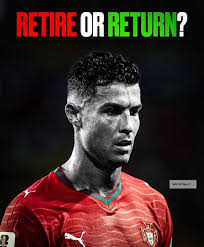
Should Cristiano Ronaldo Hang Up His Portugal Shirt?
One Foot Out the Door: Should Cristiano Ronaldo Hang Up His Portugal Shirt?
For more than two decades, Cristiano Ronaldo has been one of the defining figures of Portuguese football. From his international debut as a teenager to Portugal’s European Championship triumph in 2016 and two UEFA Nations League titles, his career with the national team has produced records, trophies and unforgettable moments.
Now, however, the question surrounding Ronaldo is no longer whether he is one of Portugal’s greatest players. It is how much longer he should continue wearing the national shirt.
At 41, Ronaldo has already played in six World Cups and became the first player to score at six editions of the tournament. His 2026 World Cup campaign ended when Portugal lost 1–0 to Spain in the round of 16. FIFA confirmed that the tournament was his last World Cup.
But his international career is not over.
In September 2026, Ronaldo revealed that he had considered retiring from international football after the World Cup but decided to continue. He has since been included in new Portugal manager Jorge Jesus’ squad and is targeting 1,000 career goals.
So, with Ronaldo’s Portugal career entering another chapter, the debate has become more complicated.
Ronaldo Has Already Given Portugal a Historic Legacy
Before considering what comes next, it is important to understand what Ronaldo has already achieved. He has been central to the most successful period in Portuguese men’s football.
Portugal won the 2016 European Championship, its first major men’s international title. The country subsequently won the Nations League in 2019 and again in 2025. Ronaldo was part of all three triumphs.
His individual records are equally remarkable.
Ronaldo has become Portugal’s most prolific international scorer and one of the most-capped players in international football. At the 2026 World Cup, he extended another extraordinary record by scoring at a sixth World Cup tournament.
For a generation of Portuguese supporters, therefore, Ronaldo is not simply another player.
He represents an entire era.
The 2026 World Cup Changed the Conversation
The 2026 World Cup appeared to offer a natural closing point. Portugal reached the knockout stage but lost 1–0 to Spain in the last 16 after a late goal from Mikel Merino. Ronaldo confirmed afterward that it was his final World Cup.
However, he deliberately avoided announcing his complete international retirement immediately.
After the defeat, Ronaldo said he wanted time with his family and did not want to make an emotional decision immediately after Portugal’s elimination.
That decision eventually became clear.
In September, he acknowledged that retirement had been considered but said he still believed he could contribute to Portugal.
He has now continued into the Nations League under Jorge Jesus.
Ronaldo Still Believes He Can Help Portugal
This is perhaps the strongest argument for continuing. Ronaldo himself does not believe his usefulness to Portugal has ended.
Ahead of Portugal’s Nations League match against Wales, he explained that he would continue playing because he believes he can still help the national team. He also pointed to his continued goal production and expressed his ambition to reach 1,000 career goals.
That is important because international selection should ultimately be connected to current contribution rather than reputation alone.
Jorge Jesus has also indicated that Ronaldo will not receive automatic privileges because of his status.
The new Portugal manager has said players will be judged according to their performance, despite Ronaldo’s extraordinary history with the national team.
That approach creates a possible middle ground.
Ronaldo can remain available while still competing for his place like everyone else.
Age Is the Biggest Question
The obvious issue is Ronaldo’s age. At 41, he is operating at a stage of his career when physical recovery, workload and consistency naturally become more important considerations.
That does not automatically mean he cannot contribute.
Football has repeatedly demonstrated that experienced players can remain useful beyond the age traditionally associated with elite international football.
The more relevant question is how Portugal uses him.
Does Ronaldo need to play every match?
Does he need to start every important game?
Does he still provide enough attacking value to justify his place?
Those questions are better answered through performances than through age alone.
Portugal Is Entering a New Era
Portugal is not short of talent. The current generation includes players such as Bruno Fernandes, Bernardo Silva, Rúben Dias and Vitinha, while younger players continue to emerge.
That means Portugal has an opportunity to gradually build an identity that does not depend entirely on Ronaldo. This does not necessarily require Ronaldo to leave immediately.
Instead, the transition could happen gradually.
Ronaldo could remain part of the squad while younger attackers assume larger responsibilities. Such an arrangement could allow Portugal to benefit from his experience without making the entire attack dependent on him.
Jorge Jesus Has a Different Challenge
The appointment of Jorge Jesus adds another dimension. Jesus replaced Roberto Martínez after Portugal’s World Cup elimination and has now begun reshaping the squad.
His message regarding Ronaldo has been relatively straightforward: reputation alone will not guarantee selection. That could make the next stage of Ronaldo’s international career particularly interesting.
Instead of asking whether Portugal should automatically keep its legendary captain, the coaching staff can assess him within the same competitive framework as other players.
If he performs, he plays.
If another player offers more in a particular match or tactical system, the manager can make that decision.
The 1,000-Goal Chase Adds Another Motivation
There is also a personal milestone involved. Ronaldo has acknowledged his ambition to reach 1,000 career goals for club and country. In September, he was reported to be 21 goals short of that milestone.
That target could influence how long he wants to remain active. International matches provide additional opportunities to score, although Portugal’s competitive objectives remain more important than an individual milestone.
The challenge for Ronaldo will therefore be maintaining the balance between personal ambition and the needs of the national team.
What Would Portugal Lose If He Retired?
Ronaldo’s departure would remove more than goals. Portugal would lose one of its most experienced leaders.
His presence also carries psychological and commercial significance. Opponents prepare differently when facing a team containing one of football’s most recognised forwards.
Young players can also benefit from sharing a dressing room with someone who has experienced multiple generations of international football.
At the same time, retirement would create space for a new generation to establish itself without the constant comparison to Ronaldo. Both outcomes have implications for Portugal’s future.
What Could Portugal Gain From His Departure?
If Ronaldo eventually retires, Portugal would have to redistribute responsibility across its attacking players.
That could accelerate the emergence of younger forwards.
It would also bring a clear end to an era and allow the national team to develop without the expectation that every major tournament must revolve around Ronaldo.
However, there is no requirement for that transition to happen immediately. Portugal can begin building for the future while Ronaldo remains involved.
The Most Important Issue Is Role, Not Retirement
The debate is often framed as a simple question:
Should Ronaldo retire or continue?
The more useful question may be:
What role should Ronaldo have?
If he continues producing goals and contributing to the team’s performances, there is a sporting case for keeping him available.
If younger players begin consistently offering greater value, then selection decisions can change.
Ronaldo himself appears to recognise this reality.
He has said he will stop when he feels he is no longer contributing to Portugal.
That provides a natural benchmark.
A Farewell Does Not Have to Be Forced
Footballers rarely control exactly how their final international appearance will look.
Some retire after lifting a trophy.
Others leave after a disappointing tournament.
Some announce their decision beforehand, while others simply play their final match without knowing it at the time.
Ronaldo has already had the opportunity to close one chapter at the 2026 World Cup.
He chose not to close the entire Portugal chapter.
For now, that decision means supporters can watch him continue while the national team begins preparing for life beyond him.
Conclusion
Cristiano Ronaldo is no longer Portugal’s future. He is part of its football history. At 41, his place in the national team inevitably attracts questions about age, playing time and succession. Yet the current evidence does not point to an immediate international retirement.
Ronaldo considered leaving after the 2026 World Cup but decided to continue. He remains part of Portugal’s squad under Jorge Jesus and has publicly stated that he still believes he can contribute.
His final World Cup has already arrived, but his final appearance for Portugal has not.
For now, the transition is underway rather than complete.
Portugal’s challenge will be to develop its next generation while making sensible use of one of the most experienced players in its history.
And Ronaldo’s challenge is simpler: continue proving through performances that there is still a meaningful place for him in the Portugal shirt.



Leave a reply




Africa’s Source for Breaking News | Entertainments | Health | Finance | Sports | Lifestyle and Business News.


