
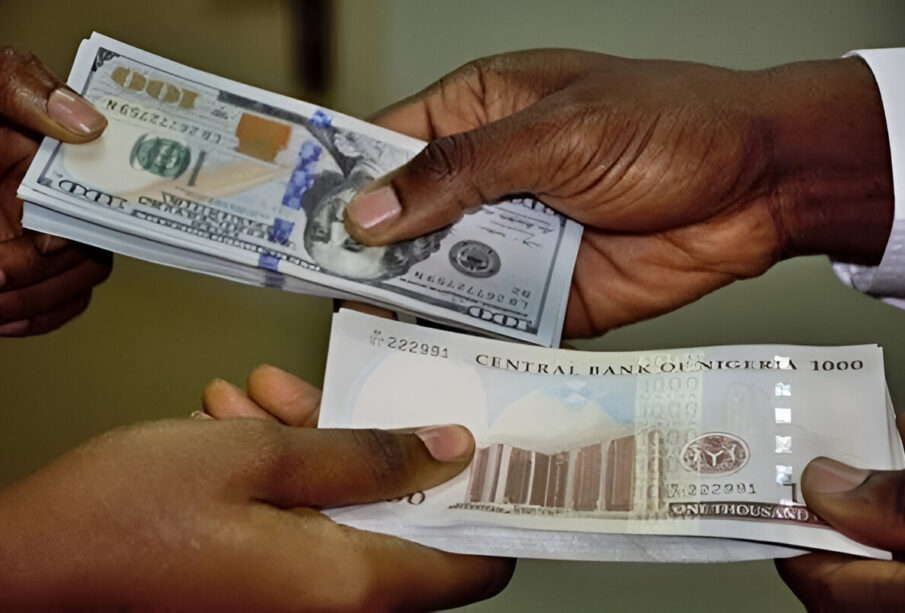
How Nigeria's Currency Is Faring at the FX Market
Naira on the Rise: How Nigeria’s Currency Is Faring at the FX Market
For years, the Nigerian naira has faced intense pressure against major international currencies, particularly the US dollar. Exchange-rate volatility has affected businesses, importers, travellers, investors and households across the country.
However, recent developments in Nigeria’s foreign exchange market point to a period of greater stability.
The naira has strengthened from the levels seen earlier in 2026, while foreign-exchange liquidity and Nigeria’s external reserves have improved. In August 2026, the average naira-dollar exchange rate appreciated by 1.46 percent month-on-month to ₦1,353.41 per US dollar, compared with ₦1,373.43 in July. Foreign-exchange inflows into the Nigerian Foreign Exchange Market also rose to $5.2 billion during the month.
By September 24, the naira was trading around ₦1,328.67 per dollar in the official market, according to data reported from the Central Bank of Nigeria. The parallel-market rate was around ₦1,385 per dollar, leaving a relatively narrow gap between the two markets.
These figures suggest that the naira is entering a more stable phase. But what is driving the improvement, and does it mean Nigerians can expect a permanently stronger currency?
The Naira Has Become More Stable
The biggest recent development may not simply be the naira’s appreciation. It is the reduction in extreme daily volatility. In mid-September, the currency remained around ₦1,329 per dollar for four consecutive trading sessions, its longest period of similar stability since July 2025.
That kind of stability matters.
Businesses need predictable exchange rates when planning imports, setting prices, negotiating contracts and managing foreign-currency obligations. Consumers also benefit when businesses have greater certainty about their dollar-related costs.
A stable exchange rate does not automatically mean prices will fall. However, it can make economic planning easier.
What Is Supporting the Naira?
Several factors are contributing to the recent improvement.
1. Stronger Foreign-Exchange Inflows
One of the most important factors is the increased supply of foreign currency. Foreign-exchange inflows into the Nigerian Foreign Exchange Market reached $5.2 billion in August, representing a 19 percent increase from July and a 54 percent increase compared with the same period a year earlier.
More dollar supply can reduce pressure on the naira when demand remains relatively manageable.
This is particularly important for Nigeria because the country’s economy relies heavily on foreign exchange for imports, international payments and other external obligations.
When dollar availability improves, businesses may find it easier to access foreign currency through formal channels.
2. Rising External Reserves
Nigeria’s foreign-exchange reserves have also strengthened. The Central Bank’s 2026 macroeconomic outlook estimated external reserves at $45.01 billion at the end of December 2025, compared with $40.19 billion a year earlier.
By September 2026, reports indicated that reserves had climbed above $54 billion. The stronger reserve position provides a larger external buffer and has helped improve sentiment around the naira.
Higher reserves can give the country greater capacity to meet external obligations and manage periods of pressure in the FX market.
3. Changes in FX Market Policies
The Central Bank of Nigeria has continued to introduce reforms aimed at improving the functioning of the foreign-exchange market. These include measures designed to increase transparency, improve liquidity and reduce opportunities for arbitrage.
The CBN’s own macroeconomic outlook noted that the premium between the Nigerian Foreign Exchange Market and Bureau de Change rates narrowed considerably in 2025.
A smaller gap between official and alternative market rates can indicate that the different segments of the market are becoming more closely aligned.
The Gap Between Official and Parallel Rates Matters
For many Nigerians, the most noticeable feature of the FX market has historically been the difference between official and parallel-market exchange rates.
That gap can create uncertainty. Importers may struggle to determine their true costs. Businesses may face difficulties pricing products. Consumers can also encounter different dollar prices depending on where foreign exchange is sourced.
Recent figures show that the gap has narrowed.
On September 24, the official rate was around ₦1,328.67 per dollar, while the reported parallel-market rate was approximately ₦1,385. That represents a difference of about ₦56 per dollar, or roughly 4.3 percent.
This is considerably different from periods when the spread between the two markets was much wider. Greater convergence can make the FX system easier for businesses and consumers to understand.
What Does a Stronger Naira Mean for Businesses?
A more stable naira can provide some relief for businesses that depend on imported goods, equipment or raw materials.
When exchange rates fluctuate sharply, companies may struggle to calculate their costs.
An importer ordering goods several weeks ahead may not know exactly how much the shipment will cost by the time payment is due.
Currency stability reduces some of that uncertainty.
Manufacturers can also benefit when imported machinery and production inputs become easier to budget for.
However, businesses should not assume that every imported product will immediately become cheaper.
Other factors still influence prices, including international commodity prices, shipping costs, taxes, electricity expenses, transportation and domestic production costs.
Importers Could Get Some Relief
Import-dependent sectors have been among those most affected by naira volatility. Businesses importing machinery, pharmaceuticals, electronics, industrial equipment and other goods have historically needed substantial amounts of foreign currency.
A stronger naira reduces the naira cost of purchasing dollars, assuming other costs remain unchanged.
For example, a company that needs $100,000 for an international payment would require about ₦132.9 million at an exchange rate of ₦1,329 per dollar. At ₦1,500 per dollar, the same payment would require ₦150 million.
That difference can significantly affect business costs.
The recent improvement therefore gives importers more room for financial planning.
But Exporters Face a Different Situation
A stronger naira is not necessarily positive for every business. Exporters earn foreign currency when they sell goods and services abroad. When the naira appreciates, those foreign-currency earnings translate into fewer naira when converted.
This means the effects of currency appreciation vary between sectors.
Businesses that import heavily may welcome a stronger naira, while exporters may have to adjust their pricing, costs and revenue expectations.
The broader objective is therefore not simply to make the naira stronger at any cost.
A healthy FX market needs to support production, investment, trade and economic stability.
What Does the Naira’s Performance Mean for Inflation?
The exchange rate is closely connected to inflation in Nigeria. A weaker naira can make imported goods and production inputs more expensive. Businesses may then pass some of those higher costs on to consumers.
A more stable currency can reduce one source of price pressure.
Recent data suggests that Nigeria’s inflation trend has also been improving. Nairametrics reported that headline inflation eased to 15.39 percent in August 2026 from 15.43 percent in July.
However, exchange-rate stability alone cannot solve inflation. Food production, transportation, energy costs, housing and other domestic factors continue to influence prices.
The CBN Is Still Keeping Monetary Policy Tight
The Central Bank of Nigeria is also maintaining a relatively tight monetary policy stance. At its September 21–22, 2026 meeting, the Monetary Policy Committee reset the Monetary Policy Rate at 23 percent, while maintaining the Cash Reserve Requirement for deposit money banks at 45 percent.
Interest rates can influence investment flows, borrowing costs, liquidity and demand for foreign currency.
The CBN therefore has several policy tools available as it attempts to maintain macroeconomic stability.
The challenge is finding a balance between supporting economic activity and maintaining price and currency stability.
Nigerians Should Not Expect a Straight-Line Recovery
The recent performance is encouraging for the FX market, but currency markets can change quickly. Oil prices, global interest rates, foreign investment, crude-oil production, imports, remittances and domestic dollar demand can all influence the naira.
A sudden increase in demand for dollars could put renewed pressure on the currency.
Global economic developments can also affect emerging-market currencies.
Therefore, a few months of stability should not automatically be interpreted as the end of all FX challenges.
The Bigger Question Is Dollar Supply
For the naira to remain stable over the long term, Nigeria needs reliable sources of foreign exchange.
Oil exports remain important because crude petroleum provides a major source of foreign-currency earnings.
However, a more diversified economy could provide additional support.
Nigeria can strengthen its external position through:
- Non-oil exports
- Agriculture and agro-processing
- Manufacturing
- Technology services
- Tourism
- Diaspora remittances
- Foreign direct investment
- International professional services
The more diverse the sources of foreign exchange become, the less dependent the country is on a single major source of dollar earnings.
Why Stability Matters More Than a Specific Exchange Rate
It is easy to focus on whether the dollar is ₦1,300, ₦1,400 or ₦1,500. But businesses and households often need something more fundamental: predictability.
A stable exchange rate makes it easier to prepare budgets, negotiate contracts, plan imports, price products and make investment decisions.
For that reason, sustained stability could prove more valuable to the Nigerian economy than a temporary surge in the naira followed by another period of sharp depreciation.
The recent narrowing of the official and parallel-market gap is therefore an important development to watch.
What Could Strengthen the Naira Further?
Several developments could support the currency if they continue.
Higher and more stable oil revenues could increase dollar inflows.
Greater non-oil exports could diversify foreign-exchange earnings.
Higher remittance inflows could provide another source of dollars.
Improved investor confidence could attract foreign capital.
More efficient FX-market operations could also reduce distortions and improve price discovery.
At the same time, maintaining confidence requires consistent economic policies.
Investors and businesses generally make long-term decisions based not only on today’s exchange rate but also on expectations about future policy and economic conditions.
What Could Put Pressure on the Naira Again?
There are also risks.
A fall in global oil prices could reduce Nigeria’s export earnings.
Higher demand for foreign currency could put pressure on the market.
A surge in imports without a corresponding increase in exports could increase demand for dollars.
Global financial-market shocks could also affect capital flows into emerging markets.
These risks explain why recent gains should be viewed as part of an ongoing adjustment rather than a guarantee of permanent appreciation.
Conclusion
The Nigerian naira is currently showing signs of improved stability in the foreign-exchange market. In August, the currency appreciated by 1.46 percent on average against the dollar, while FX inflows increased significantly. By September, the official exchange rate had moved around the ₦1,329-per-dollar level, with the gap between the official and parallel markets remaining relatively narrow.
Rising external reserves, stronger dollar inflows and ongoing FX-market reforms are among the factors supporting the recent performance.
For Nigerians, the biggest benefit may not be simply seeing a lower dollar price. It is the possibility of a more predictable currency environment.
However, the naira’s long-term strength will depend on more than central-bank measures. Sustainable foreign-exchange earnings, stronger exports, productive investment, stable oil revenues and greater confidence in the Nigerian economy will all matter.
The recent rally is therefore worth watching, but the real test will be whether Nigeria can turn short-term FX stability into lasting economic stability.




Leave a reply







Africa’s Source for Breaking News | Entertainments | Health | Finance | Sports | Lifestyle and Business News.


