
Two Nigerias, One Road
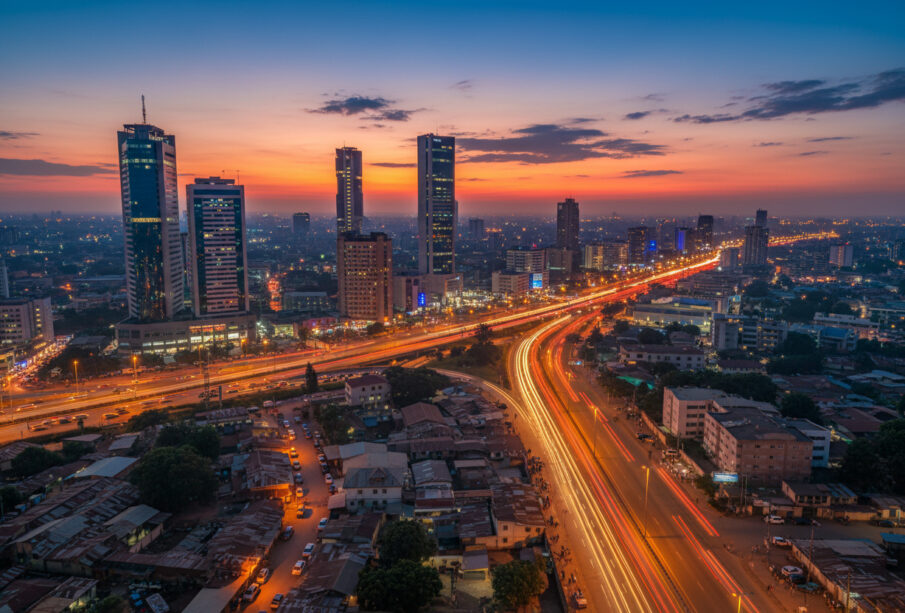
Two Nigerias, One Road
Two Nigerias, One Road: ₦70,000 for You, ₦21 Million for Them
A public service announcement from the Republic of Everything Is Fine
Picture a woman in a danfo somewhere between Ikeja and Oshodi, her sick child asleep on her lap. The traffic hasn’t moved in forty minutes. The fever is climbing, and the hospital sits two junctions away, which tonight might as well be two countries.
Then the sirens start.
Police vehicles shove cars onto the shoulder. A convoy of tinted SUVs roars past in a blur of flashing lights. Inside one of them, someone important is heading to something important, perhaps a meeting about improving the lives of people like her. Three minutes later the road closes behind them like water, and she is back in the same gridlock, forty minutes older, with a hotter child.
Nobody apologised, and nobody ever will. That is the thing about the siren. It isn’t just noise. It is a sentence the state speaks to you every day: you may wait, because you do not matter.
The Law, as a Work of Fiction
Here’s the joke, and you should laugh, because the alternative is worse. Nigeria has laws about this. The National Road Traffic Regulation restricts sirens to a short list of top officials and to genuine emergency vehicles like ambulances and fire trucks. Yet investigators found that most public officials who use sirens on Nigerian roads do so illegally, and the agencies meant to enforce the rules can’t agree on them. icirnigeria
Sirens have spread from the powerful to the merely wealthy: lawmakers, businessmen, even bank bullion vans. One report put the penalty at as little as ₦3,000. That is the price of making a nation of strangers pull over for you, less than a decent lunch. guardian
And the bans? Every few years a police chief announces a crackdown with great ceremony. Yet past and present IGPs themselves travel in escorted convoys with sirens and flashing lights. Imagine a lecture on fasting delivered from a buffet. icirnigeria
The danger is real, too. One editorial described a governor’s convoy at an accident scene, where aides reportedly said he couldn’t stop because he was rushing to a meeting. Read that again. A meeting outranked a human being. dailytrust
“But Sir, How Do They Afford It?”
Glad you asked, because here the satire writes itself, and the footnotes are real.
Nigeria’s minimum wage is ₦70,000 a month. The law says that is what a full-time worker should earn: the nurse, the security guard, the teacher, the cleaner at the building where the important meeting happens.
Now meet the people who legislate for that worker. The Revenue Mobilisation Allocation and Fiscal Commission prescribes more than ₦1,063,860 a month for a senator in salary and allowances covering vehicle fuel, domestic staff and entertainment. That alone equals roughly fifteen minimum wages, every month, before we reach the interesting part. allafrica
The Arithmetic of Contempt
The interesting part is “running costs.” Former senator Shehu Sani has said senators receive ₦13.5 million a month on top of their pay, and Senator Kawu Sumaila says senators earn at least ₦21 million monthly once everything adds up. On Sumaila’s account, the monthly package for the 99 non-principal senators reaches about ₦2.079 billion. allafricadailytrust
Do the maths, since arithmetic belongs to no political party. At ₦70,000 a month, a worker needs 300 months, a full twenty-five years, to earn what one senator collects in a single month by that figure. The ₦2.079 billion could pay the minimum wage to nearly 30,000 workers for a month. That isn’t a typo. That’s a town.
The Receipts Nobody Shows
Fairness demands a caveat: the numbers are contested. A former Senate president has cited a different picture, a ₦1.5 million monthly salary and a ₦13 million quarterly running allowance. When the running cost revelation first surfaced, the Senate itself called it nothing new and said office holders have running costs separate from their salaries. zikokocitinewsroom
Fine. Then the fix is simple: publish the receipts, line by line. The poor must prove everything to everyone, so those who write the rules shouldn’t be the only people whose pay stays a rumour.
Then comes the theology. Senate President Godswill Akpabio has said lawmakers make sacrifices for Nigeria. Somewhere a woman is choosing between her child’s drugs and this week’s transport fare, while the nation thanks a man who earns in a month what she would earn in a quarter century. I would laugh, but I’ve run out of laughter. Maybe it sits in the budget under “entertainment.” allafrica
Safe Roads Are for People With Escorts
The siren and the salary tell the same story in two languages.
In August, gunmen abducted fifteen corps members on a Kogi road as they travelled between camp and posting: young graduates serving the nation on a monthly allowance most of them spend before the month ends. They had no sirens, no escorts and no convoy. They had a bus, a hope that the road would be kind and a certificate that says they served their country.
Think about who travels that road at night and who doesn’t. The convoy rides with armed men. The commuter rides with prayer. In the Nigeria we have built, security isn’t a right but a service tier. Premium members get police escorts and gated estates. Everyone else gets a pat on the shoulder and a statement that agencies “are on top of the situation.”
Yes, the corps members came home, and thank God. But nobody should need rescuing on the way to national service. Rescue is what we celebrate after protection has already failed.
The Opt-Out Class
Here’s what the siren and the salary reveal. The people who run this country have quietly stopped needing it.
Their children study in schools with working generators and fees that could fund a village. When illness strikes, they find equipment at home or fly abroad for treatment that costs more than many families earn in a year. Diesel generators run their lights, and boreholes fill their taps. Sirens clear their roads in advance, so they never sit in what the rest of us call traffic and they call other people’s problem.
When the rich can opt out of public life, public life loses its most powerful customers. Nobody with leverage rages about the pothole, the ward with no drugs or the school with no roof, because nobody with leverage ever visits them. Neglect isn’t an accident. It’s what happens when the people who could fix something have no reason to care whether it’s broken.
Looking Down Instead of Up
The cruelty doesn’t stop at the top. It trickles. The officer bullies the okada rider, the okada rider curses the pedestrian, and the landlord squeezes the tenant, each person passing the humiliation to someone smaller. The class system divides us, and it also teaches us to look down instead of up. It keeps the poor busy fighting over crumbs so we never ask who owns the bakery.
The Ledger
So let’s close the books on what this country teaches the average Nigerian. Wait quietly, because your time is cheap. Accept risk, because your safety is optional. Smile at wages that look generous in law and ridiculous at the market. Call your complaints “negativity” before anyone else does. Hear that you are “the future” in speeches, then watch yourself become a statistic in hospitals. And keep hoping, because the system counts on it: every year you find a little more hope somewhere.
But a country is not its convoys. A country is the woman in the danfo, holding a feverish child, watching important men fly past the window. If Nigeria has a future, it doesn’t live in the sirens. It lives in her, and in whether the next sound she hears is a road that finally opens for everyone.
A Modest Proposal
So here’s my offer to the powerful, from one ordinary citizen: swap places for a week. Take the danfo. Live on ₦70,000. Queue at the hospital with no escort and no name to drop. If after seven days you still call it a sacrifice to serve, we will send you a thank-you note.
We’ll write it ourselves. It will be the first time anyone uses the word “sacrifice” correctly.



Leave a reply





Africa’s Source for Breaking News | Entertainments | Health | Finance | Sports | Lifestyle and Business News.


