
A Foodie’s Guide to Ghana
A Foodie's Guide to Ghana
A Foodie’s Guide to Ghana: Dishes That Tell the Nation’s Story
Ghana is a country where food tells stories of history, community, tradition and identity. From the busy streets of Accra to the coastal towns of Cape Coast and the traditional communities of the Ashanti Region, every meal offers a glimpse into the nation’s rich cultural heritage. Ghanaian cuisine combines indigenous ingredients, centuries-old cooking methods and influences from trade, migration and regional interactions.
For travellers, exploring Ghana through its food is more than a culinary adventure. It is an opportunity to understand how people live, celebrate, remember their ancestors and welcome visitors. Popular dishes such as jollof rice, fufu, waakye and banku reflect the country’s diversity and the importance of shared meals in Ghanaian society.
Whether you are visiting Ghana for the first time or planning a return trip, these traditional dishes provide an unforgettable introduction to the nation’s story.
1. Jollof Rice: A West African Favourite
Few dishes generate as much excitement across West Africa as jollof rice. In Ghana, this beloved meal consists of rice cooked in a rich tomato-based sauce with onions, peppers, spices and seasonings. Depending on the cook, it may include vegetables or accompany chicken, beef, fish and fried plantain.
Ghanaian jollof has a distinctive identity shaped by local preferences and cooking techniques. Some cooks favour fragrant basmati rice, while others use different varieties to achieve their preferred texture. The smoky flavour that develops when rice cooks against the bottom of the pot is especially prized by many enthusiasts.
Jollof also reflects the region’s history of cultural exchange and shared culinary traditions. Different West African countries have developed their own interpretations, making the dish a source of friendly competition and national pride.
In Ghana, jollof appears at birthday parties, weddings, family gatherings and other celebrations. It is also widely available at restaurants and roadside food stalls. For visitors, tasting it alongside grilled chicken and shito, a spicy pepper condiment, offers a delicious introduction to Ghanaian cooking.
2. Fufu and Soup: The Comfort of Tradition
Fufu is one of Ghana’s most recognisable traditional foods. Cooks prepare it by pounding boiled cassava, plantain or other suitable starchy ingredients until they form a smooth, stretchy dough. The exact ingredients and proportions vary across communities and households.
The dish is commonly served with soups such as light soup, groundnut soup or palm nut soup. These soups may contain fish, goat meat, chicken or other proteins, depending on local preferences and the occasion.
Fufu carries strong cultural significance because its preparation and consumption often bring people together. Traditionally, pounding fufu requires coordinated effort, and family members may share the work. Although modern equipment has simplified preparation in many homes, the dish remains closely associated with hospitality and communal dining.
Eating fufu also involves a distinctive technique. Diners generally take a small portion with their fingers, shape it and dip it into the soup before swallowing. Visitors should follow their hosts’ example and ask questions when unsure.
Across Ghana, variations in fufu preparation and soup recipes reveal how geography, available ingredients and cultural traditions influence everyday meals.
3. Waakye: A Story of Everyday Ghana
Waakye is a popular Ghanaian rice-and-beans dish often sold by street vendors and small food businesses. Cooks prepare rice and beans together, traditionally using dried sorghum leaves to help produce the characteristic reddish-brown colour.
The dish is particularly associated with breakfast and lunch, although people enjoy it at different times of the day. Its popularity demonstrates how Ghanaian food culture combines affordability, convenience and satisfying flavours.
A typical serving may include spaghetti, boiled eggs, fish, meat, gari, salad and shito. Customers often choose their preferred combination, allowing one basic dish to accommodate different tastes and budgets.
Waakye’s everyday appeal also tells a story about Ghana’s informal economy. Vendors prepare meals for workers, students, traders and commuters who need filling food during busy days. Their businesses support livelihoods while preserving culinary traditions.
For travellers, buying waakye from a well-regarded local vendor can be a memorable cultural experience. It provides an opportunity to observe how people interact around food and how familiar dishes become part of daily urban life.
4. Banku and Grilled Tilapia: A Taste of Coastal Ghana
Ghana’s coastline has shaped its food culture for generations. Fishing communities have developed dishes that make excellent use of the seafood available along the Atlantic coast.
Banku is a fermented dough made primarily from a mixture of corn and cassava dough, cooked with water until it reaches a smooth, firm consistency. It is commonly served with grilled tilapia, fresh pepper sauce and sliced onions or tomatoes.
The combination brings together contrasting flavours and textures. Banku provides a slightly sour taste, while grilled tilapia offers a smoky, savoury flavour. The pepper sauce adds heat and freshness.
This meal is particularly popular in coastal and urban areas, including Accra, where restaurants and roadside grills serve fish throughout the day and evening.
Beyond its flavour, banku and tilapia reflect the relationship between fishing, agriculture and local trade. Fish supplies protein, while maize and cassava connect the meal to farming communities and regional food markets.
For visitors, enjoying freshly grilled tilapia at a local restaurant offers a direct connection to Ghana’s coastal lifestyle.
5. Kenkey: Food, History and Community
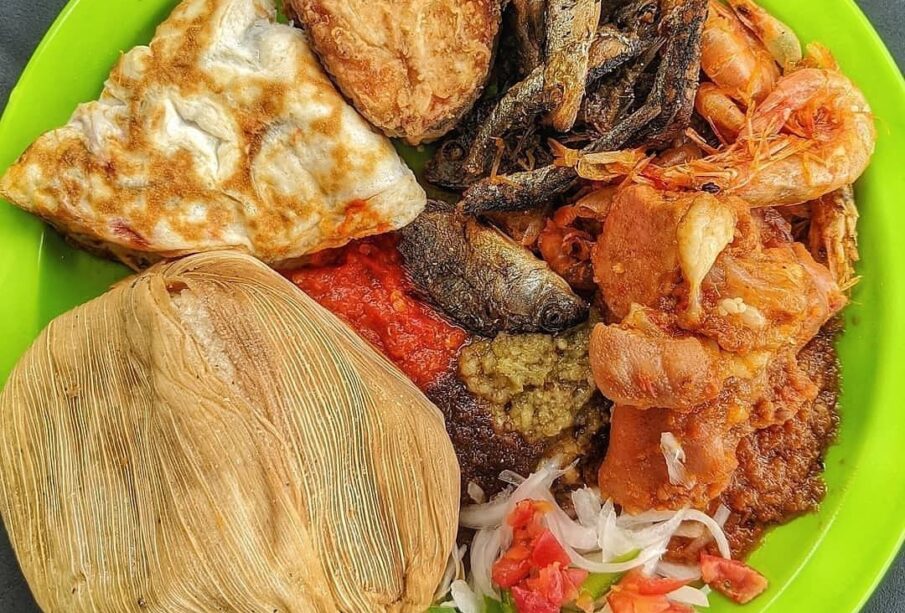
Kenkey is another important Ghanaian staple made from fermented maize dough. The dough undergoes preparation and partial cooking before being wrapped, often in corn husks or other suitable leaves, and boiled until firm.
Ga kenkey, associated particularly with the Ga people around Accra, is commonly wrapped in corn husks. Fante kenkey, associated with Fante communities in the Central Region, traditionally uses different preparation methods and plantain leaves.
These variations demonstrate that Ghanaian cuisine is not a single uniform tradition. Different ethnic communities preserve distinct recipes while sharing ingredients and culinary influences.
Kenkey is often served with fried fish, pepper sauce and sometimes fresh vegetables. It is filling, practical and well suited to preparation in batches, making it an important food for households and vendors.
For travellers exploring Accra or Cape Coast, trying kenkey provides an opportunity to appreciate the regional identities that contribute to Ghana’s national culture.
6. Red Red: A Delicious Celebration of Beans
Red red is a Ghanaian bean stew commonly prepared with black-eyed peas or cowpeas, palm oil, onions, tomatoes and seasonings. Fried ripe plantain usually accompanies it, creating a satisfying combination of savoury beans and sweet plantain.
The name is commonly associated with the reddish appearance created by palm oil and the accompanying stew. However, recipes differ, and some cooks adjust the ingredients to suit their preferences.
Red red is an excellent example of how everyday ingredients can create deeply satisfying meals. Beans provide protein and fibre, while plantain contributes carbohydrates and a naturally sweet flavour.
The dish is popular in homes, restaurants and food stalls. It can also suit people looking for a filling meal without meat, although some versions may include fish or other ingredients.
For food lovers, red red demonstrates the creativity of Ghanaian home cooking and the importance of plant-based ingredients in local diets.
7. Kelewele: The Street Food You Should Not Miss
Kelewele consists of ripe plantain cut into pieces, seasoned with spices and fried until the outside becomes golden and slightly crisp. Ginger, chilli, onions and other seasonings may feature in the mixture.
Sold by street vendors, particularly in the evenings, kelewele is popular as a snack and can also accompany other dishes. Some people enjoy it with roasted groundnuts, which add a crunchy contrast.
Its popularity highlights the importance of street food in Ghanaian cities. Vendors transform inexpensive, readily available ingredients into snacks that attract students, workers, families and visitors.
Kelewele is also a reminder that a country’s food culture extends beyond formal restaurants. Street stalls, neighbourhood markets and roadside grills often preserve familiar flavours and provide opportunities for social interaction.
Travellers should choose vendors who maintain good food-handling practices and serve freshly prepared plantain.
8. Groundnut Soup and Palm Nut Soup: Flavours of the Land
Ghanaian soups deserve special attention because they reveal how local ingredients shape regional cooking. Groundnut soup uses peanuts to create a rich, savoury base, while palm nut soup is prepared from the pulp of palm fruit.
Both soups can contain fish, meat or other proteins and are commonly served with staples such as fufu, rice balls or other locally preferred accompaniments.
Groundnuts have long played an important role in food production and trade across parts of West Africa. Palm products also feature prominently in the region’s agricultural and culinary history.
These soups demonstrate the skill involved in balancing rich ingredients with spices, vegetables and proteins. Recipes differ between households, and many cooks take pride in techniques passed down through generations.
Trying these dishes offers visitors a deeper understanding of Ghanaian food beyond its most internationally recognised meals.
Discover Ghana One Meal at a Time
Ghana’s cuisine is a reflection of its people, geography, history and cultural diversity. Jollof rice represents shared West African culinary traditions, fufu highlights communal dining, waakye captures everyday urban life, and banku with tilapia celebrates the country’s coastal heritage. Meanwhile, kenkey, red red, kelewele and traditional soups reveal the creativity behind familiar local ingredients.
For travellers, the best way to discover these dishes is to explore different regions, visit reputable local eateries and ask residents about the foods they love. Each meal offers a chance to learn something new about Ghana’s communities and traditions.
Ultimately, food is one of the most welcoming ways to experience a country. In Ghana, a plate of traditional food can tell a story of family, enterprise, history and belonging. Come hungry, stay curious and let every meal bring you closer to the heart of Ghana.



Leave a reply





Africa’s Source for Breaking News | Entertainments | Health | Finance | Sports | Lifestyle and Business News.


