
How Climate Change Affects African Agriculture
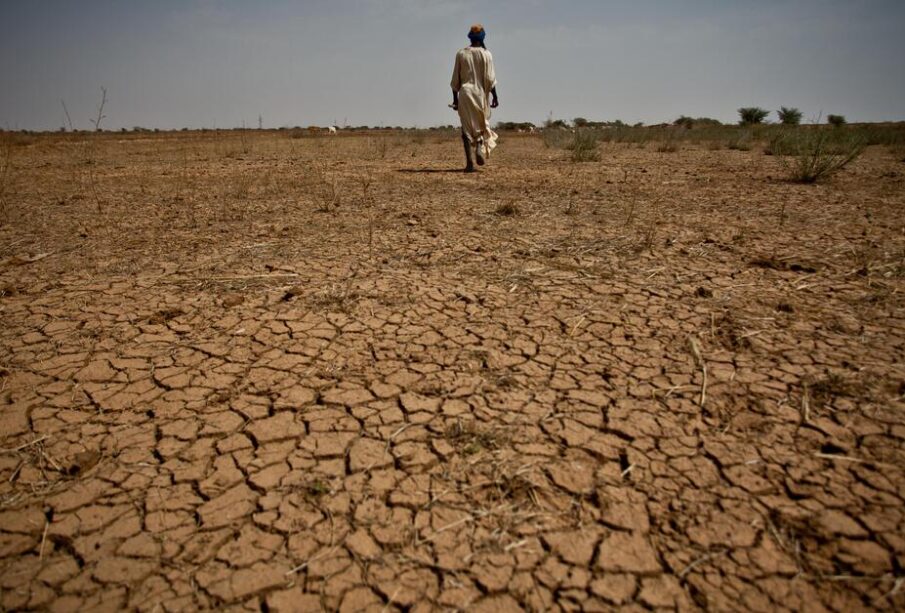
Arid soils in Mauritania, crops have failed and the region faces a major food crisis. Over 700,000 people are affected in Mauritania and 12 million across West Africa. ESP Tierra árida en Mauritania. Las cosechas han sido deficitarias y la región se encuentra haciendo frente a una grave crisis alimentaria. Más de 700,000 personas están en riesgo en Mauritania y 12 millones en el Sahel. Fr: Sols arides en Mauritanie. Les récoltes nont rien donné et la région est confrontée à une crise alimentaire majeure. Plus de 700 000 personnes sont menacées en Mauritanie et 12 millions dans l'ensemble du Sahel.
Agriculture is one of the most important sectors of Africa’s economy and a major source of food, employment, and income for millions of households.
However, the sector is increasingly exposed to the effects of climate change. Changing rainfall patterns, rising temperatures, droughts, floods, and extreme weather events are making farming more difficult and unpredictable across many parts of the continent.
The Food and Agriculture Organization (FAO) notes that African countries are experiencing greater climate variability, including extreme floods and droughts and increasing uncertainty around seasonal rainfall. These changes threaten agricultural production, ecosystems, incomes, and food security.
For African farmers, climate change is therefore not simply an environmental issue. It is also an economic and food-security challenge.
Changing Rainfall Patterns
Rainfall is essential to agriculture across much of Africa, particularly for smallholder farmers who depend on rain-fed production.
Climate change is making rainfall less predictable in many regions. Farmers may experience late rains, shorter rainy seasons, unusually heavy rainfall, or long dry periods.
This uncertainty makes it harder to decide when to plant and harvest. A farmer who plants after an expected first rainfall may lose seeds if the rains stop. Similarly, excessive rainfall can damage crops shortly after planting.
FAO identifies shifting and unpredictable rainfall patterns as one of the major climate-related threats facing food systems.
Rising Temperatures and Crop Yields
Higher temperatures can directly affect the growth of crops. Every crop has a temperature range within which it performs best. When temperatures rise beyond that range, plants can experience heat stress. High temperatures can also increase water loss from soil and plants, creating additional pressure during dry periods.
Staple crops such as maize, millet, sorghum, beans, and other food crops may therefore experience declining productivity when heat and water stress become more severe.
Research cited by the World Bank indicates that climate change could significantly reduce the growing areas suitable for major African crops under higher-warming scenarios.
Droughts and Water Shortages
Drought is one of the most serious climate risks facing African agriculture.
When rainfall is insufficient for an extended period, farmers may struggle to provide enough water for crops and livestock. Rivers, reservoirs, and groundwater resources can also come under pressure.
Drought can result in:
- Lower crop yields
- Livestock losses
- Reduced pasture availability
- Higher food prices
- Loss of farming income
- Increased competition for water
- Greater dependence on food imports
The effects can extend well beyond rural communities because reduced agricultural production can influence food availability and prices in urban markets.
Flooding Can Destroy Farmland
Climate change does not only mean drought. In some regions, heavier rainfall and flooding are becoming major agricultural threats.
Floodwaters can wash away fertile topsoil, destroy crops, damage irrigation systems, and kill livestock. Flooding can also leave farmland waterlogged, making it difficult to cultivate.
In countries with major river systems and densely populated farming areas, a single severe flood can affect thousands of households.
The problem is particularly serious when floods occur close to harvest time because farmers may lose months of work within a few days.
More Pressure From Pests and Diseases
Changes in temperature and rainfall can also influence agricultural pests and diseases.
Warmer conditions may allow certain insects and crop diseases to survive or spread into areas where they were previously less common. FAO identifies pest and disease outbreaks among the climate-related pressures affecting agrifood systems.
For farmers with limited access to agricultural extension services, improved seeds, pesticides, or disease-resistant varieties, these changes can create significant financial losses.
Livestock can also be affected. Heat stress, changing pasture conditions, water shortages, and the spread of certain diseases can reduce animal productivity.
Climate Change and Food Prices
When farmers produce less food, the consequences can eventually reach consumers. Lower harvests can reduce supplies of maize, rice, vegetables, grains, fruits, and other agricultural products. If demand remains high while supply falls, prices may increase.
This creates difficulties for households that already spend a large share of their income on food.
Climate-related disruptions can also affect international food markets. Recent global food-price increases have demonstrated how extreme weather and supply disruptions can influence the cost of agricultural commodities.
For Africa, strengthening local agricultural resilience is therefore important not only for farmers but also for consumers.
Smallholder Farmers Face Greater Risks
Smallholder farmers are particularly vulnerable because many operate with limited financial resources.
A large commercial farm may have access to irrigation, insurance, modern machinery, improved seeds, weather information, and financial reserves. A smallholder farmer may have far fewer options.
When a harvest fails, the consequences can include debt, reduced household income, food shortages, or the need to sell livestock and other assets.
FAO notes that agricultural communities in Sub-Saharan Africa have particularly low adaptive capacity, making investment in adaptation increasingly important.
Climate Change Can Affect Livestock
Agriculture is not limited to crops. Livestock farming is also vulnerable to climate change.
Extreme heat can reduce animal productivity, while drought can reduce the availability of grass and other animal feed. Water shortages can make it more difficult to maintain healthy herds.
Pastoral communities may face additional challenges when traditional grazing areas become less productive. In some areas, this can increase competition over water and pasture.
Improving livestock management, water access, animal health services, and access to climate information can help communities respond to these pressures.
Effects on Fisheries and Coastal Agriculture
Climate change also affects Africa’s fisheries and coastal food systems. Rising temperatures and changes in aquatic environments can affect fish populations and fishing livelihoods. Coastal agricultural areas face additional risks from sea-level rise and saltwater intrusion.
In parts of North Africa, for example, FAO identifies increasing heat, reduced precipitation, drought, sea-level rise, and saltwater intrusion as important threats to agricultural systems.
These challenges demonstrate that climate adaptation must consider different agricultural environments rather than applying one solution across the entire continent.
How African Agriculture Can Adapt
Although the challenges are serious, African farmers and institutions can adopt strategies that improve resilience.
1. Climate-Resilient Crops
Farmers can increasingly use crop varieties that are better suited to drought, heat, pests, or shorter growing seasons.
Selecting appropriate varieties for local conditions can reduce the risk of total crop failure.
2. Better Water Management
Efficient irrigation, rainwater harvesting, water storage, drip irrigation, and improved soil moisture management can help farmers make better use of available water.
Water management becomes especially important in areas where rainfall is increasingly unpredictable.
3. Diversifying Crops
Depending heavily on one crop can increase vulnerability.
Growing several crops with different climate tolerances can spread risk. Crop diversification can also improve household nutrition and create additional sources of income.
The World Bank has highlighted diversification as one way African agricultural households can strengthen resilience and improve nutrition outcomes.
4. Agroforestry
Combining trees with crops and livestock can provide several benefits.
Trees can help protect soil, reduce erosion, provide shade, improve biodiversity, and potentially create additional sources of food or income.
Agroforestry is among the practices included within the broader climate-smart agriculture approach.
5. Better Weather Information
Farmers need reliable information about rainfall, temperature, drought risks, and extreme weather.
Mobile phones and digital agricultural platforms can make climate information more accessible. Early warnings can help farmers decide when to plant, harvest, move livestock, or protect crops.
6. Climate-Smart Agriculture
Climate-smart agriculture aims to increase productivity while improving resilience and reducing agricultural greenhouse-gas emissions.
According to the World Bank, climate-smart agriculture can include climate-resilient crop varieties, conservation agriculture, agroforestry, precision farming, water-management practices, and improved livestock management.
Governments Have an Important Role
Farmers cannot solve the climate challenge alone.
Governments can support agricultural adaptation by investing in irrigation, rural roads, storage facilities, agricultural research, extension services, weather information, insurance, and affordable financing.
Policies can also encourage sustainable land management and improve farmers’ access to climate-resilient technologies.
Investment in research is particularly important because Africa’s agricultural conditions vary considerably. A solution that works well for a farmer in Kenya may not be suitable for a farmer in northern Nigeria, Morocco, Ghana, or South Africa.
The Importance of Regional Cooperation
Climate change does not respect national borders.
Droughts, floods, changing rainfall patterns, and food-price shocks can affect several countries simultaneously. Regional cooperation can therefore help African countries share agricultural research, weather information, technologies, and expertise.
Cross-border trade is also important. When one country experiences a poor harvest, functioning regional markets can help food move from areas with sufficient supplies to areas experiencing shortages.
Conclusion
Climate change is already reshaping African agriculture. Rising temperatures, unpredictable rainfall, droughts, floods, pests, diseases, and water shortages are placing pressure on farmers and food systems across the continent.
The challenge is significant, but African agriculture can become more resilient through investment in climate-smart farming, improved water management, crop diversification, better weather information, agricultural research, and stronger rural infrastructure.
The future of African agriculture will depend not only on producing more food but also on producing it in ways that can withstand a changing climate. Supporting farmers today can help protect food supplies, rural livelihoods, and economic stability for future generations.




Leave a reply





Africa’s Source for Breaking News | Entertainments | Health | Finance | Sports | Lifestyle and Business News.


