
Sudan’s Mineral and Resource Wealth
Sudan's Mineral and Resource Wealth
Sudan’s Mineral and Resource Wealth: Who Really Benefits?
Sudan is a country rich in natural resources, yet millions of its citizens continue to face poverty, displacement, food insecurity, and limited access to essential services. Beneath its vast landscapes lie valuable deposits of gold, oil, iron ore, copper, and other minerals. Its agricultural land, livestock, and water resources also offer significant economic potential. However, possessing valuable resources does not automatically guarantee prosperity. Sudan’s experience demonstrates how political instability, weak institutions, corruption, and armed conflict can prevent national wealth from improving ordinary people’s lives.
The central question is simple: if Sudan possesses so much natural wealth, why do so many Sudanese people struggle to benefit from it? Answering this question requires examining the country’s mining industry, its history of oil production, the role of powerful political and military actors, and the economic consequences of the ongoing conflict.
Sudan’s Natural Resources: A Valuable National Asset
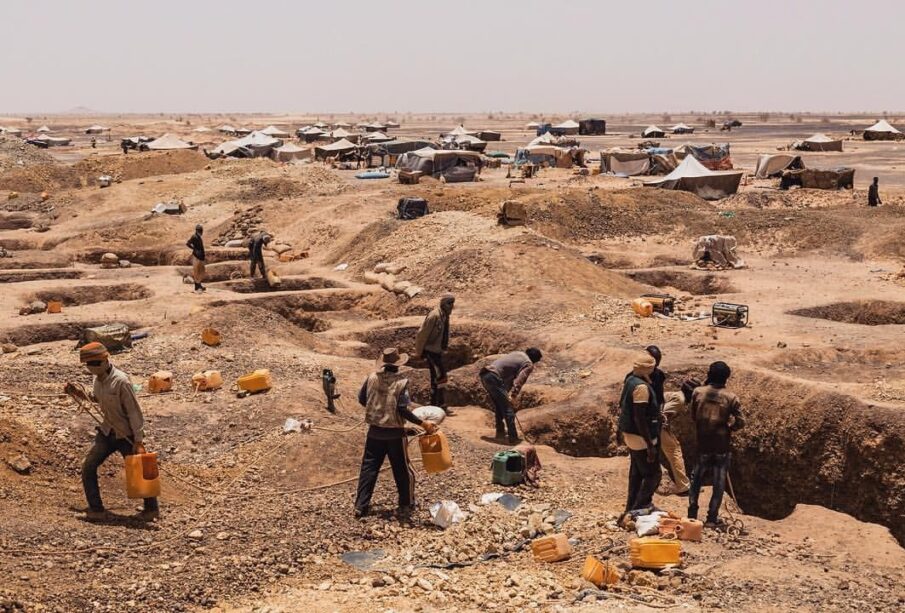
Sudan has considerable mineral potential, with gold playing a particularly important role in its economy. Gold mining takes place across several regions, involving artisanal miners, small-scale operators, and larger commercial companies. For many rural households, mining provides income when agricultural opportunities are limited.
Oil has also shaped Sudan’s economic history. Before South Sudan became independent in 2011, Sudan’s economy depended heavily on oil revenues. However, the separation transferred most of the former country’s known oil reserves to South Sudan. Sudan retained important oil infrastructure, including processing facilities and export pipelines serving landlocked South Sudan, but lost a major source of government income.
Beyond gold and oil, Sudan has deposits of minerals such as iron ore, manganese, chromium, and copper. Its agricultural potential is equally significant. With suitable investment in irrigation, transport, storage, and processing, Sudan could expand food production and create employment across farming and related industries.
These resources could support industrial development, public infrastructure, and economic diversification. The challenge is ensuring that the revenue they generate serves the wider population rather than a narrow group of beneficiaries.
Gold Mining: Who Controls the Wealth?
Gold has become especially important to Sudan’s economy since the loss of much of its oil revenue. However, the sector operates through a complicated network of artisanal miners, private companies, traders, exporters, and politically connected interests.
For ordinary miners, gold extraction can offer a vital source of income. Many work under difficult conditions, often using basic equipment and facing exposure to dangerous substances, including mercury. They may also lack reliable access to financing, modern technology, safety equipment, and fair market prices.
Meanwhile, larger traders and businesses can earn substantial profits by purchasing gold, processing it, and moving it into international markets. Where regulation is weak, the state may struggle to collect the taxes and royalties it is owed. Smuggling can further reduce public revenue while making it difficult to establish how much gold Sudan actually produces and exports.
Gold has also attracted scrutiny because of its links to powerful political and military networks. Different actors have sought control over mines, trading routes, and export channels. In a country affected by armed conflict, control over gold can provide money to purchase equipment, pay fighters, and sustain competing power structures.
Consequently, gold may generate considerable private wealth without producing equivalent benefits for public services. The problem is not mining itself. Rather, it is the absence of sufficiently transparent and accountable systems that ensure the industry contributes fairly to national development.
The Oil Legacy and the Cost of Political Decisions
Sudan’s oil history illustrates how natural resources can create economic opportunities while deepening political tensions. Oil exports once provided the government with substantial revenue, supporting public spending and foreign currency earnings.
However, oil wealth did not resolve the country’s underlying economic problems. Revenue management, unequal development, political exclusion, and conflict complicated efforts to translate oil income into sustainable prosperity. Many communities continued to experience poor infrastructure and limited access to services despite the country’s resource earnings.
South Sudan’s independence in 2011 exposed Sudan’s vulnerability to dependence on a single major export. The loss of most oil production contributed to a sharp decline in government revenue and foreign exchange earnings. Sudan needed to strengthen other productive sectors, but economic pressures and political instability made that transition difficult.
The lesson is important for resource-rich African countries: natural resources can support development, but overdependence creates risks. Governments need strong institutions, diversified economies, and transparent spending systems to ensure resource income remains beneficial even when production or international prices change.
How Conflict Changes Who Benefits
The war that erupted in April 2023 between the Sudanese Armed Forces and the Rapid Support Forces has intensified the struggle over economic assets and resources. The conflict has devastated communities, disrupted trade, damaged infrastructure, and displaced millions of people.
In this environment, control over mines, transport corridors, commercial networks, and other revenue-generating activities can become strategically important. Gold and other resources may help finance armed actors, although the exact amounts and flows are difficult to verify amid disrupted reporting and informal trading.
Ordinary citizens face a different reality. Farmers may lose access to their land, workers may lose their jobs, and businesses may close because of insecurity. Transport disruptions make goods more expensive, while damage to public infrastructure limits access to electricity, healthcare, education, and clean water.
The consequences extend beyond Sudan’s borders. Informal gold exports and regional trading networks can connect Sudanese production to international buyers. This creates challenges for governments, businesses, and financial institutions seeking to ensure that mineral purchases do not contribute to conflict financing or human rights abuses.
When armed groups and connected commercial interests gain from resource extraction while communities bear the costs of war, natural wealth becomes part of a destructive economic cycle.
What Would It Take for Sudanese Citizens to Benefit?
Sudan needs more than increased mineral production. It needs systems that convert resource income into lasting public value.
First, transparent licensing and revenue reporting would help reveal who owns mining businesses, how much gold is produced, and what taxes companies pay. Independent audits and stronger enforcement could reduce opportunities for corruption and revenue leakage.
Second, authorities must establish safeguards against the use of mineral revenues to finance armed violence. Responsible supply-chain monitoring, traceable transactions, and cooperation with legitimate regional and international partners can help reduce illicit trade.
Third, mining communities deserve better working conditions, environmental protection, and a fair share of economic opportunities. Formalisation should not simply punish small-scale miners; it should also provide safer equipment, training, legal access to markets, and practical routes to compliance.
Finally, resource revenue must support national priorities. Investment in healthcare, education, roads, electricity, agriculture, and local industries would help spread economic benefits beyond mining centres and political elites. Such reforms require accountable civilian institutions, peace, and meaningful participation by affected communities.
Wealth Beneath the Ground, Prosperity Still Out of Reach
Sudan’s mineral and natural resources could help rebuild its economy and improve millions of lives. Yet gold, oil, and other valuable assets cannot guarantee prosperity when institutions are weak, economic opportunities are unequal, and armed conflict undermines public accountability.
The real question is therefore not simply how much wealth Sudan possesses, but who controls it, who earns from it, and how much reaches ordinary citizens. Miners need safe working conditions and fair compensation. Communities need reliable services and economic opportunities. The country needs transparent institutions capable of turning resource income into lasting development.
Sudan’s experience offers a wider lesson for Africa: natural wealth becomes a national blessing only when its benefits reach the people who own it collectively. Without accountability, resources can enrich powerful interests while leaving citizens to bear the economic, social, and environmental costs. With peace, responsible management, and fair distribution, however, Sudan’s resources could become a foundation for recovery rather than another source of division.


Leave a reply







Africa’s Source for Breaking News | Entertainments | Health | Finance | Sports | Lifestyle and Business News.


