
Traditional Foods Served During Celebration
Traditional Foods Served During Celebration
Across Africa, food is more than something placed on a plate.
It is a powerful part of culture, family life, hospitality, and celebration. From weddings and birthdays to naming ceremonies, festivals, religious occasions, and community gatherings, traditional foods often bring people together and create lasting memories.
Although African cuisines vary widely from one region to another, many traditional celebration foods share a common purpose: welcoming guests, honoring important occasions, and preserving cultural identity.
Why Food Matters During African Celebrations
Food plays an important social role in many African communities. Preparing a large meal for visitors is often seen as a sign of generosity and respect. Families may spend days preparing ingredients, cooking special dishes, and organizing enough food for relatives, friends, neighbors, and other guests.
Celebration meals also provide an opportunity to pass traditions from one generation to another. Younger family members learn recipes, cooking techniques, and the stories behind particular dishes by participating in preparations.
Popular Traditional Celebration Foods Across Africa
Jollof Rice
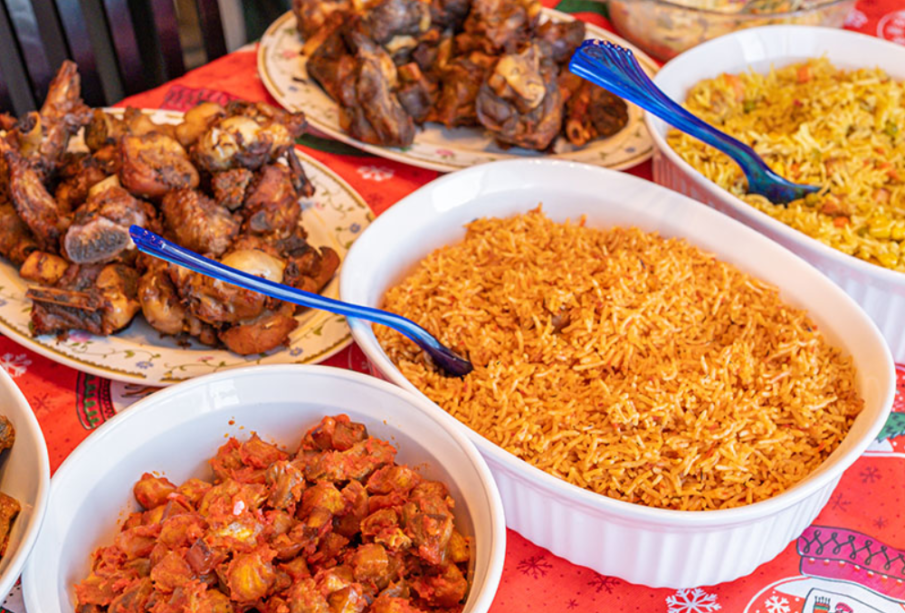
Jollof rice is one of West Africa’s most recognizable celebration dishes. It is commonly served at weddings, parties, birthdays, naming ceremonies, and other social gatherings.
Prepared with rice, tomatoes, peppers, onions, spices, and other ingredients, jollof rice can be served with fried plantain, chicken, beef, fish, or salads. Different countries and families have their own approaches, making the dish a source of both culinary pride and friendly competition.
Pounded Yam and Soups
In Nigeria and parts of West Africa, pounded yam and traditional soups are popular choices for important gatherings. Soups such as egusi, vegetable soup, ogbono, and various regional specialties may accompany the meal.
These dishes are particularly suitable for large celebrations because they can be prepared in substantial quantities and served to many guests.
Injera and Ethiopian Stews
In Ethiopia and Eritrea, injera is an important part of traditional meals and social gatherings. The soft, fermented flatbread is commonly served with a variety of stews, vegetables, legumes, and meat dishes.
Sharing food from a communal platter can add a strong sense of togetherness to celebrations.
Nyama Choma
Nyama choma, meaning roasted meat in Swahili, is popular in East Africa, particularly in Kenya and Tanzania. It is commonly enjoyed during social gatherings and celebrations.
The meat may be served with vegetables, sauces, salads, or staple foods, creating a meal that encourages people to gather, talk, and eat together.
Couscous and Tagines
In North Africa, couscous and tagines are closely associated with family meals, hospitality, and special occasions. Couscous may be prepared with vegetables, meat, or other ingredients, while tagines are slow-cooked dishes prepared with combinations of meat, vegetables, fruits, and spices.
These foods reflect the rich culinary traditions of countries such as Morocco, Algeria, and Tunisia.
Fried Plantain and Rice Dishes
Fried plantain is a familiar addition to celebration meals in many parts of West and Central Africa. Its sweet flavor and crispy texture make it a popular side dish.
It is often paired with rice, grilled meat, beans, stews, or other traditional dishes. Because plantain is relatively easy to prepare in large quantities, it works well for gatherings with many guests.
Ugali and Meat or Vegetable Stews
Ugali is a staple food in several East African countries, including Kenya, Tanzania, and Uganda. Made from maize flour and water, it is commonly served with meat, vegetables, beans, or rich sauces.
During celebrations, families may prepare larger and more elaborate accompaniments to turn the everyday staple into a special communal meal.
Traditional Drinks and Snacks
Celebrations are not limited to main meals. Traditional drinks and snacks also contribute to the experience.
Depending on the region, guests may be served drinks made from fruits, grains, herbs, or other locally available ingredients. Snacks can include puff-puff, chin chin, samosas, mandazi, roasted nuts, fried dough, and other locally popular treats.
These smaller foods are particularly useful during celebrations because guests can enjoy them while socializing before or after the main meal.
Food as a Symbol of Hospitality
One of the most important roles of traditional celebration food is hospitality. Guests are often encouraged to eat generously, and hosts may continue offering food even after guests have finished their plates.
This generosity reflects a broader cultural value: making visitors feel welcomed and valued.
For many families, the quality and variety of food served at an event can also become part of the memories people take away from the celebration.
Preserving Traditional Food Culture
Modern lifestyles are changing how people cook and celebrate, but traditional foods remain important. Families continue to preserve recipes by teaching younger generations how to prepare them.
Social media, restaurants, food businesses, cooking shows, and cultural festivals have also helped introduce traditional African dishes to wider audiences.
At the same time, families can keep these traditions alive by documenting recipes, supporting local food producers, and preparing traditional dishes during important occasions.
Conclusion
Traditional foods give African celebrations a distinctive sense of identity. From jollof rice and pounded yam to injera, nyama choma, couscous, and ugali, these dishes represent much more than nourishment.
They tell stories about communities, heritage, family, hospitality, and shared experiences. As African societies continue to evolve, traditional celebration foods can remain an important connection between the past and the present, bringing people together around the table while keeping cultural traditions alive.



Leave a reply




Africa’s Source for Breaking News | Entertainments | Health | Finance | Sports | Lifestyle and Business News.


