
Africa’s Emerging Economic Powerhouses
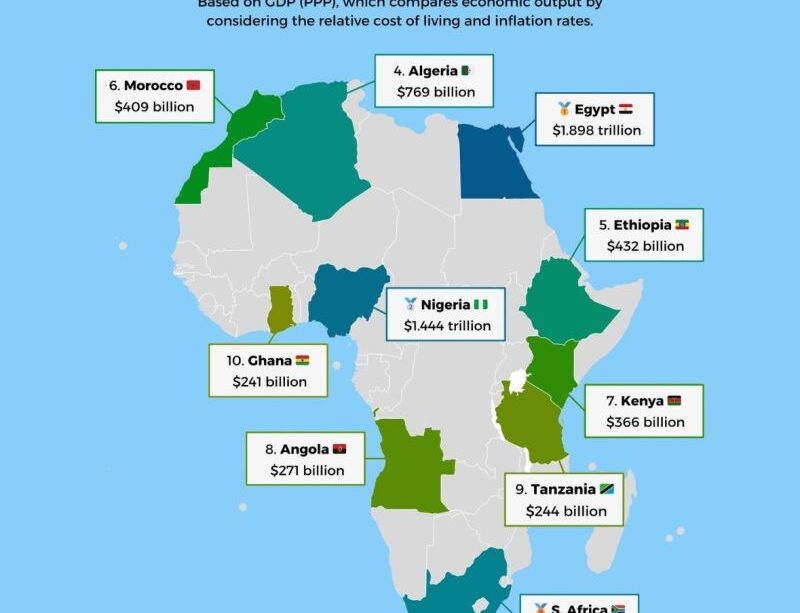
Africa's Emerging Economic Powerhouses
Africa is entering a period of significant economic transformation.
Across the continent, countries are investing in technology, infrastructure, manufacturing, energy, agriculture, financial services, and trade. While traditional economic leaders continue to play an important role, a new group of countries is increasingly attracting attention for their growth potential and expanding business ecosystems.
These emerging economic powerhouses are not defined only by the size of their economies. Their influence also comes from entrepreneurship, innovation, natural resources, strategic geographic positions, growing consumer markets, and their ability to participate in regional and global trade.
Understanding these economies provides insight into where some of Africa’s most important economic opportunities may develop in the coming years.
Nigeria: A Large Consumer and Innovation Market
Nigeria remains one of Africa’s most important economic centers. Its large population creates a substantial consumer market, while its economy spans oil and gas, agriculture, telecommunications, financial services, entertainment, manufacturing, and technology.
The country’s technology ecosystem has attracted significant attention, particularly in fintech. Nigerian companies have developed digital payment, banking, e-commerce, and financial-management solutions that serve consumers and businesses across Africa.
Beyond technology, Nigeria’s entertainment industry has also become an important source of cultural and economic influence. Afrobeats, Nollywood, fashion, and creative services increasingly connect Nigerian businesses with international audiences.
The country’s large domestic market also creates opportunities for manufacturers, retailers, logistics companies, food businesses, and service providers.
Egypt: A Strategic Gateway Between Africa and the World
Egypt occupies a unique economic position because of its geography. Its location connects Africa with the Middle East, Europe, and Asia, while the Suez Canal remains an important international trade route.
The country has a diversified economy that includes tourism, manufacturing, construction, telecommunications, agriculture, energy, and financial services.
Egypt is also investing in infrastructure and digital transformation. Its major cities and economic zones continue to develop new business and investment opportunities.
With its strategic location and established industrial base, Egypt has the potential to remain an important commercial gateway between African and global markets.
Kenya: East Africa’s Technology and Services Hub
Kenya has established itself as one of East Africa’s most dynamic business environments. Nairobi serves as a regional center for finance, technology, telecommunications, development organizations, and international businesses.
The country’s mobile-money ecosystem has played an important role in expanding access to financial services. At the same time, Kenyan entrepreneurs are developing solutions in agriculture, healthcare, logistics, education, and financial technology.
Kenya’s geographic position also supports regional trade. Its ports, roads, aviation connections, and commercial networks link businesses to markets across East Africa.
The combination of technology, entrepreneurship, infrastructure, and regional connectivity makes Kenya an important part of Africa’s emerging economic landscape.
Ethiopia: Expanding Manufacturing and Infrastructure
Ethiopia has one of Africa’s largest populations and has invested heavily in infrastructure and industrial development.
Manufacturing has become an important part of its economic strategy, particularly in areas such as textiles, garments, leather products, and agricultural processing. Industrial parks have also been developed to attract businesses and create employment.
Agriculture remains central to the economy, while infrastructure projects have sought to improve transportation, electricity generation, and connectivity.
Ethiopia’s long-term economic development will depend on factors including investment conditions, infrastructure, productivity, and regional stability. Nevertheless, its large population and industrial ambitions make it an economy worth watching.
Rwanda: Building a Business-Friendly Digital Economy
Rwanda has pursued an economic model that emphasizes technology, services, tourism, infrastructure, and investment.
Kigali has developed a reputation as a growing technology and conference destination. The government has also promoted digital services and entrepreneurship as part of its broader economic-development strategy.
Tourism contributes significantly to the country’s economy, while sectors such as agriculture, construction, finance, and information technology continue to create opportunities.
Although Rwanda’s economy is relatively small compared with Nigeria or Egypt, its emphasis on digital transformation and services demonstrates how smaller African economies can build specialized areas of competitiveness.
Ghana: A Growing Center for Business and Trade
Ghana has developed a diverse economy supported by agriculture, mining, oil and gas, manufacturing, financial services, and technology.
Accra has become an important destination for startups, international organizations, investors, and creative businesses. Ghana’s growing digital economy is also creating new opportunities for entrepreneurs and technology companies.
The country’s position along the Gulf of Guinea gives it access to international maritime trade, while initiatives connected to the African Continental Free Trade Area create opportunities for businesses seeking to serve wider African markets.
Ghana’s experience demonstrates the importance of combining domestic entrepreneurship with regional and international trade.
Tanzania: Unlocking Opportunities Through Infrastructure and Trade
Tanzania is becoming increasingly important in East Africa because of its natural resources, agricultural potential, tourism industry, and strategic location.
Dar es Salaam is a major commercial and transport center, connecting Tanzania with neighboring landlocked countries. Infrastructure investments in roads, ports, railways, and energy can further strengthen this regional role.
Tourism remains another major economic sector, supported by attractions such as Mount Kilimanjaro and Tanzania’s national parks and coastline.
As infrastructure improves and regional trade expands, Tanzania could play a larger role in connecting East African producers and consumers.
Morocco: Connecting Africa, Europe, and Global Markets
Morocco has developed a diversified economy with important activities in manufacturing, agriculture, tourism, renewable energy, automotive production, and aerospace.
Its proximity to Europe has helped it develop strong commercial connections with European markets. At the same time, Moroccan companies have increasingly expanded into other African countries.
The country’s investments in infrastructure, renewable energy, industrial zones, and logistics have strengthened its position as a manufacturing and trade center.
Morocco illustrates how geographic location, infrastructure, industrial policy, and international partnerships can combine to support economic development.
Côte d’Ivoire: West Africa’s Agricultural and Commercial Engine
Côte d’Ivoire plays an important role in the West African economy. It is a major producer of cocoa and other agricultural commodities, while Abidjan functions as an important commercial and financial center.
The country has also invested in infrastructure, telecommunications, manufacturing, and urban development.
As West African economies become more integrated, Côte d’Ivoire’s agricultural production and commercial infrastructure could support increasing regional trade.
Senegal: Developing a More Diversified Economy
Senegal has emerged as another important economy in West Africa. Dakar serves as a regional center for business, finance, transportation, culture, and international organizations.
The country’s economy includes agriculture, fishing, mining, tourism, telecommunications, construction, and services.
Senegal has also been developing its digital economy and investing in infrastructure. Its position on the western edge of Africa provides access to Atlantic trade routes and creates opportunities for regional commerce.
What Is Driving Africa’s Emerging Economic Powerhouses?
Several common factors are contributing to the rise of these economies.
1. Growing Consumer Markets
Africa’s population and urban centers are expanding. This creates demand for housing, transportation, food, healthcare, financial services, entertainment, education, and digital products.
Businesses that understand local consumers can find opportunities across both established and emerging markets.
2. Digital Transformation
Technology is changing how Africans work, shop, communicate, save money, access healthcare, and run businesses.
Mobile payments, fintech, e-commerce, artificial intelligence, digital education, and online services are creating entirely new industries while transforming existing ones.
3. Infrastructure Development
Roads, railways, ports, airports, electricity systems, telecommunications networks, and industrial zones are critical to economic growth.
Better infrastructure can reduce business costs, improve market access, and make it easier for goods and services to move between African countries.
4. Regional Trade
The African Continental Free Trade Area has created a framework for deeper economic integration across the continent.
Greater regional trade can allow African businesses to move beyond individual national markets and build companies that serve multiple countries.
5. Entrepreneurial Energy
Africa has a rapidly expanding community of entrepreneurs building businesses around local challenges.
From food distribution and logistics to financial technology and renewable energy, entrepreneurs are increasingly turning everyday problems into commercial opportunities.
The Importance of Natural Resources
Natural resources remain central to many African economies. Oil, gas, gold, copper, cobalt, lithium, iron ore, agricultural commodities, and other resources contribute significantly to exports and government revenues.
However, the emerging economic story is increasingly broader than raw materials.
Countries are exploring ways to add value locally through manufacturing, processing, technology, and specialized services. For example, agricultural economies can create greater value by processing crops before export, while mineral-producing countries can explore opportunities further along the manufacturing supply chain.
This shift from simply exporting resources toward developing local value chains could have significant economic implications.
Challenges That Could Shape Future Growth
Africa’s emerging economic powerhouses also face serious challenges.
Infrastructure gaps remain a concern in many markets. Access to reliable electricity, affordable financing, skilled workers, and efficient transportation can affect business growth.
Inflation, currency fluctuations, public debt, regulatory uncertainty, and political instability can also influence investment and consumer spending.
Another challenge is ensuring that economic growth creates broad opportunities. Strong headline growth does not automatically mean that all households benefit equally.
For emerging economies to achieve sustainable progress, investment in education, healthcare, skills development, infrastructure, transparent institutions, and productive industries will remain important.
The Future of Africa’s Economic Landscape
Africa’s economic future is unlikely to be controlled by a single country or region. Instead, different economies may develop specialized strengths.
One country may become a technology hub, another a manufacturing center, another a logistics gateway, and another a major agricultural or energy producer.
This diversity can become an advantage when countries trade with one another and build complementary industries.
For businesses and entrepreneurs, the most important opportunity may therefore be to look beyond individual national markets. Understanding regional consumer behavior, infrastructure, trade corridors, technology adoption, and local industries can reveal opportunities that are difficult to see from a single-country perspective.
Conclusion
Africa’s emerging economic powerhouses reflect a continent undergoing significant economic change. Nigeria, Egypt, Kenya, Ethiopia, Rwanda, Ghana, Tanzania, Morocco, Côte d’Ivoire, and Senegal each have different economic structures and opportunities.
Their paths will not be identical. Their progress will depend on infrastructure, investment, innovation, governance, human capital, regional integration, and the ability to turn local resources and talent into sustainable economic value.
For Africa, the bigger story is not simply which countries are growing fastest. It is how these economies can increasingly connect with one another to create a more integrated, innovative, and productive continental marketplace.




Leave a reply





Africa’s Source for Breaking News | Entertainments | Health | Finance | Sports | Lifestyle and Business News.


