
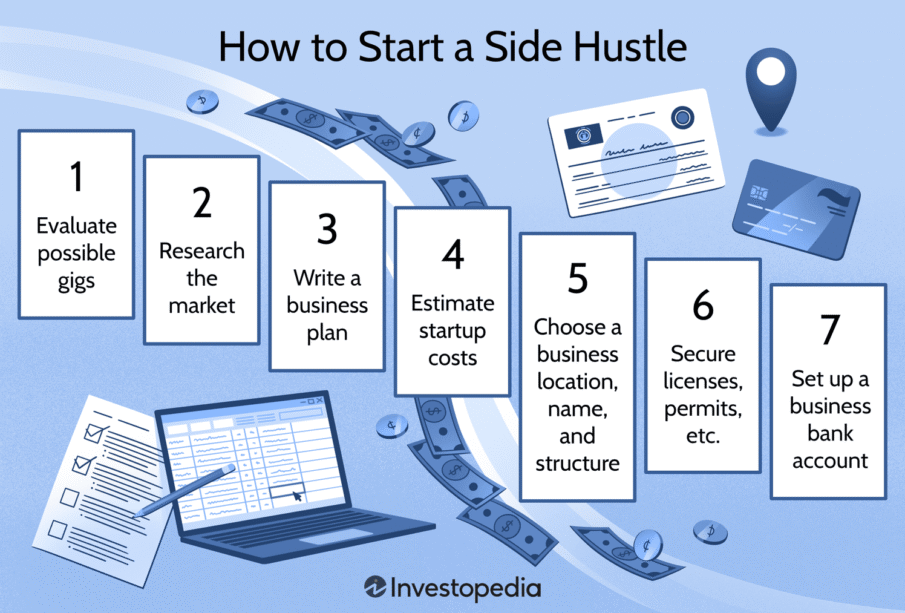
How to Create a Sustainable Side Hustle
A side hustle can provide extra income, help you develop valuable skills, and create opportunities beyond your main job.
However, not every side hustle becomes sustainable. Some start with excitement but quickly become difficult to manage because they require too much time, money, or energy. Creating a sustainable side hustle means building something that can generate income without overwhelming your schedule or becoming impossible to maintain. With the right approach, you can gradually turn a small idea into a reliable source of additional income.
Start With a Useful Skill or Problem
The strongest side hustles usually solve a real problem. Instead of choosing an idea simply because it is popular, consider what you can do well and what people are willing to pay for.
Your starting point could be a professional skill, hobby, experience, or service you already understand. Writing, graphic design, video editing, tutoring, photography, social media management, cooking, repairs, and digital services can all become potential side hustles.
Ask yourself:
- What am I good at?
- What problems can I solve?
- Who needs this solution?
- What would they realistically pay for it?
The answers can help you identify an opportunity that fits both your abilities and the market.
Choose a Side Hustle That Fits Your Lifestyle
A good side hustle should complement your existing responsibilities rather than constantly compete with them.
If you work a full-time job, for example, a side hustle that requires you to be available every afternoon may become difficult to maintain. A service that allows flexible scheduling or remote work may be more suitable.
Consider how many hours you can realistically dedicate each week. It is better to commit five consistent hours than to plan for twenty hours and repeatedly fall behind.
Start Small
One of the biggest mistakes new entrepreneurs make is spending too much money before testing their idea.
You do not necessarily need expensive equipment, an office, a large inventory, or a sophisticated website to begin. Start with the simplest version of your product or service.
For example, if you want to offer design services, you can begin with a small portfolio and a few carefully selected services. If you want to sell food, you could test demand with a limited menu before investing in a larger operation.
Starting small allows you to learn what customers actually want before making major investments.
Research Your Target Market
A sustainable side hustle needs customers. Before investing significant time or money, find out whether there is genuine demand for what you want to offer.
Research potential customers and competitors. Look at what similar businesses charge, what customers complain about, and where existing providers may be falling short.
You do not need to copy competitors. Instead, look for opportunities to provide something faster, simpler, more convenient, more specialized, or more reliable.
Create a Simple Business Model
You should understand how your side hustle will make money.
Determine:
- What you are selling
- Who you are selling to
- How much you will charge
- What it costs you to deliver the product or service
- How customers will find you
- How you will receive payments
For example, a freelance designer might charge per project, while a tutor could charge per session. A digital creator might earn through subscriptions, advertising, sponsorships, or digital products.
The model does not have to be complicated at the beginning. It simply needs to make financial sense.
Keep Your Costs Under Control
Revenue does not automatically mean profit.
Track expenses such as transportation, internet, software subscriptions, packaging, advertising, equipment, delivery, and payment fees. Knowing your costs will help you set prices that protect your margins.
Avoid purchasing things simply because they make your side hustle look more professional. Invest in tools when they improve your quality, efficiency, or ability to serve customers.
Build a Strong Reputation
Trust is one of the most valuable assets for a small business. Deliver work when you promised. Communicate clearly. Be honest about what you can and cannot do. Respond to customers professionally and address problems quickly.
Satisfied customers can become repeat customers and may recommend your services to others.
Even a small side hustle can benefit from a professional identity, including consistent branding, clear pricing, quality communication, and a simple portfolio or social media presence.
Use Digital Platforms Wisely
Digital platforms can make it easier to find customers without spending heavily on traditional advertising.
Social media can showcase your work and demonstrate your expertise. Messaging platforms can help you communicate with customers and manage inquiries. Online marketplaces can connect service providers with potential clients.
However, do not try to be everywhere at once. Choose one or two platforms where your target customers are most active and focus on building a useful presence there.
Create Repeatable Systems
A side hustle becomes easier to maintain when you stop doing everything from scratch. Create simple systems for common tasks. You can prepare reusable invoices, customer messages, contracts, pricing sheets, content templates, order forms, or project checklists.
Automation can also reduce repetitive work. For example, scheduling tools can organize appointments or social media posts, while accounting tools can help track income and expenses.
The goal is to reduce the amount of time you spend on routine tasks so you can focus on activities that generate value.
Separate Personal and Business Money
Even when your side hustle is small, keep accurate financial records. If possible, separate business income from personal spending. Record every payment and expense, and regularly review how much the business is actually making.
This makes it easier to understand whether your side hustle is profitable and prepares you for future growth.
Avoid Burnout
A side hustle should improve your financial situation without destroying your personal well-being.
If you constantly work late into the night or sacrifice every weekend, the business may become difficult to sustain.
Set boundaries around your working hours. Give yourself time to rest and maintain your main responsibilities.
Sustainability is not only about money. It is also about creating a business that you can continue operating without exhausting yourself.
Reinvest Strategically
Once your side hustle begins generating consistent income, consider reinvesting part of the profit.
You might upgrade equipment, improve your skills, purchase better software, improve packaging, create marketing materials, or outsource a task that consumes too much time.
Reinvestment should have a clear purpose. Instead of spending simply because money is available, ask whether the expense can improve quality, efficiency, customer experience, or revenue.
Know When to Scale
Not every side hustle needs to become a full-time business. For some people, the ideal outcome is a small operation that produces reliable additional income. Others may eventually want to turn their side hustle into their primary career.
Before scaling, make sure demand is consistent and the business model works. Increasing orders without improving your systems can create more stress rather than more profit.
Scale gradually when the numbers support it.
Keep Learning and Adapting
Markets change, customer expectations evolve, and new technologies can create both opportunities and competition.
Pay attention to customer feedback and monitor what is happening in your industry. Continue improving your skills and look for ways to make your offer more valuable.
A sustainable side hustle is rarely built once and left unchanged. It grows through continuous learning and adjustment.
Final Thoughts
Creating a sustainable side hustle does not require starting with a huge amount of money or having everything figured out from day one. What matters is identifying a genuine need, offering a valuable solution, controlling costs, managing your time, and building systems that allow the business to grow gradually.
Start with what you know, test your idea with real customers, learn from the results, and reinvest carefully. With consistency and realistic expectations, a side hustle can become more than extra work—it can become a dependable source of income and a pathway to greater financial flexibility.




Leave a reply




Africa’s Source for Breaking News | Entertainments | Health | Finance | Sports | Lifestyle and Business News.


