
Popular Vegetarian Dishes Across Africa
Popular Vegetarian Dishes Across Africa
Africa has a rich and diverse vegetarian food culture.
Across the continent, families prepare delicious meals with beans, vegetables, grains, roots, fruits, and spices. These ingredients create filling dishes without relying on meat or fish.
From North Africa to Southern Africa, traditional cooks have developed unique ways to turn simple local ingredients into flavorful meals. Moreover, many of these dishes remain affordable, nutritious, and easy to prepare for families and communities.
Why Vegetarian Food Matters in Africa
Vegetarian dishes have long played an important role in African cuisine. People often prepare them because local ingredients remain accessible and affordable. In addition, some families choose plant-based meals for religious, cultural, health, or personal reasons.
Beans, lentils, maize, cassava, millet, sorghum, vegetables, plantains, and sweet potatoes provide important ingredients for many traditional meals.
More importantly, these foods show how African communities have created satisfying meals from ingredients that grow locally.
Popular Vegetarian Dishes Across Africa
1. Moroccan Vegetable Tagine
Moroccan vegetable tagine combines fresh vegetables with aromatic herbs and spices. Cooks commonly use carrots, potatoes, tomatoes, zucchini, onions, and chickpeas.
The slow cooking process allows the ingredients to absorb the rich flavors of the spices. People often serve the dish with bread or couscous.
As a result, vegetable tagine offers a comforting and flavorful meal without meat.
2. Ethiopian Misir Wat
Misir wat is a popular Ethiopian lentil stew. Cooks prepare lentils with berbere, onions, garlic, and other spices.
The dish delivers a rich, spicy flavor and works well as a filling vegetarian meal. Traditionally, people eat misir wat with injera, Ethiopia’s famous fermented flatbread.
Furthermore, lentils provide plant-based protein, making the meal both satisfying and nutritious.
3. Egyptian Ful Medames
Ful medames remains one of Egypt’s most popular traditional dishes. Cooks prepare the meal with cooked fava beans and season it with ingredients such as lemon juice, garlic, olive oil, and spices.
People commonly eat ful for breakfast, although they can enjoy it at other times of the day as well.
Because fava beans provide protein and fiber, ful medames makes a simple and filling vegetarian meal.
4. West African Bean Dishes
Beans feature heavily in many West African kitchens. Families prepare them in different ways, depending on the country and region.
For example, Nigerian cooks may combine beans with tomatoes, peppers, onions, and spices. Some people also serve beans with plantain, rice, yam, or other local staples.
Consequently, bean dishes offer affordable ways for families to enjoy filling plant-based meals.
5. Ghanaian Red Red
Red red is a popular Ghanaian bean dish made with black-eyed peas or similar beans. Cooks combine the beans with palm oil, tomatoes, onions, and spices.
Most importantly, fried plantain often accompanies the dish. The sweet plantain balances the savory and spicy beans, creating a flavorful combination.
Red red also demonstrates how traditional African cooking can transform simple ingredients into a memorable meal.
6. South African Chakalaka
Chakalaka brings together vegetables and bold spices in a flavorful relish. Common ingredients include tomatoes, onions, peppers, carrots, and spices.
People often serve chakalaka with pap, rice, bread, or other traditional foods.
In addition, cooks can adjust the ingredients according to personal preferences and the vegetables available in their communities.
7. Moroccan Vegetable Couscous
Couscous provides another popular vegetarian option from North Africa. Cooks can combine it with vegetables such as carrots, pumpkin, zucchini, onions, and chickpeas.
The grains absorb the flavors of the vegetables, herbs, and spices during preparation.
Therefore, vegetable couscous works well for both everyday meals and larger family gatherings.
8. Ugandan Matoke
Matoke uses green bananas as its main ingredient. Ugandan families often cook the bananas and serve them with different sauces and stews.
For a vegetarian version, cooks can pair matoke with beans, vegetables, or groundnut sauce.
Besides its satisfying texture, matoke highlights the important role that bananas play in East African cuisine.
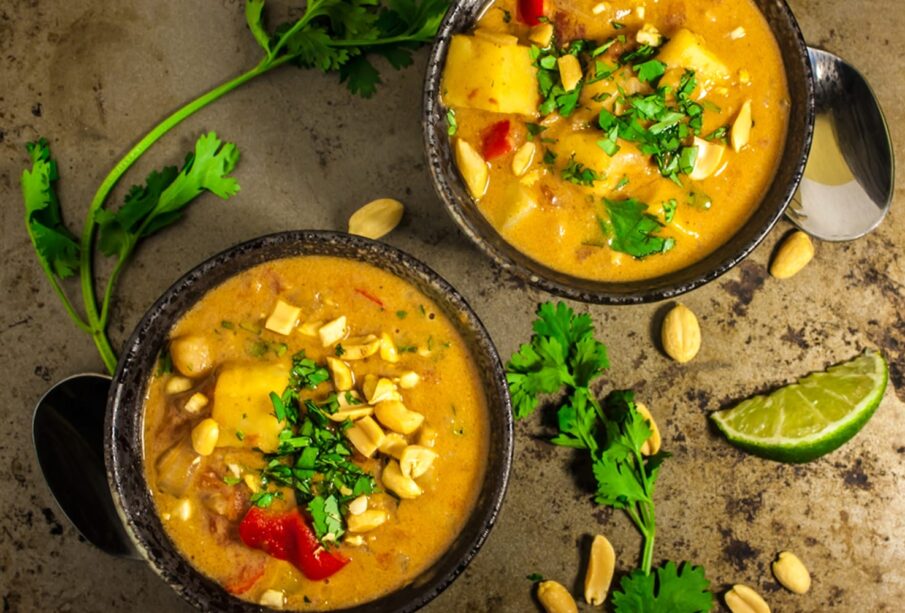
9. Groundnut and Vegetable Stews
Groundnuts, also known as peanuts, appear in many African cuisines. Cooks grind them into sauces or use them to thicken vegetable stews.
A typical groundnut stew may contain tomatoes, onions, peppers, leafy vegetables, and spices.
Furthermore, groundnuts add richness and plant-based protein to the meal. This makes groundnut-based dishes both flavorful and filling.
10. African Leafy Green Dishes
Leafy vegetables form an important part of many African diets. Depending on the region, cooks may use amaranth, pumpkin leaves, cassava leaves, moringa leaves, spinach, or other local greens.
They often cook these vegetables with tomatoes, onions, peppers, groundnuts, or spices.
As a result, leafy green dishes provide a practical way to add vegetables and important nutrients to traditional meals.
Common Ingredients in African Vegetarian Cooking
African vegetarian dishes rely on many locally available ingredients. These include:
- Beans and lentils
- Chickpeas and peas
- Maize and maize flour
- Millet and sorghum
- Rice and couscous
- Cassava
- Plantains and green bananas
- Sweet potatoes
- Yams
- Leafy vegetables
- Tomatoes and peppers
- Groundnuts
- Coconut
- Local herbs and spices
Together, these ingredients allow families to prepare countless combinations of vegetarian meals.
Vegetarian Food and African Culture
Vegetarian cooking does more than provide food. It also reflects Africa’s agricultural traditions and cultural diversity.
For generations, families have passed recipes from parents to children. Consequently, traditional vegetarian meals remain an important part of cultural identity.
In addition, these dishes can bring families together during everyday meals, festivals, religious occasions, and community gatherings.
The Rise of Plant-Based Eating
Interest in plant-based eating continues to grow in many African cities. Health awareness, changing lifestyles, environmental concerns, and new food trends all contribute to this growth.
However, Africans do not need to abandon traditional foods to enjoy plant-based meals. Instead, many familiar dishes already provide excellent vegetarian options.
Restaurants and food businesses can also respond to this growing interest by adding more traditional vegetarian dishes to their menus.
Conclusion
Popular vegetarian dishes across Africa demonstrate the incredible variety of the continent’s food culture. From Ethiopian misir wat and Egyptian ful medames to Ghanaian red red, Moroccan vegetable tagine, South African chakalaka, and Ugandan matoke, African cuisine offers countless plant-based choices.
Most importantly, these dishes show that nutritious and satisfying meals can start with simple local ingredients.
As more people explore vegetarian eating, traditional African dishes can introduce them to new flavors while preserving valuable culinary traditions for future generations.



Leave a reply





Africa’s Source for Breaking News | Entertainments | Health | Finance | Sports | Lifestyle and Business News.


