
Regional Cooperation and Economic Integration in Africa
Regional Cooperation and Economic Integration in Africa
Africa is home to some of the world’s fastest-growing economies, a young and ambitious population, and abundant natural resources.
Yet, despite this potential, many African countries continue to face challenges such as limited intra-African trade, infrastructure gaps, high transportation costs, and fragmented markets. Regional cooperation and economic integration offer an important pathway toward addressing these challenges.
By working together, African countries can create larger markets, improve trade, strengthen infrastructure, and build greater economic resilience. Regional integration is not simply about removing trade barriers; it is about creating stronger connections between economies and people across borders.
What Is Regional Cooperation?
Regional cooperation occurs when countries within a particular geographical area work together to achieve shared economic, political, social, or developmental objectives.
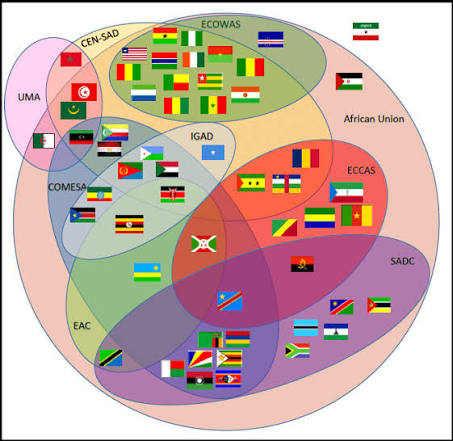
In Africa, countries cooperate through regional organizations and economic communities such as the Economic Community of West African States (ECOWAS), the East African Community (EAC), the Southern African Development Community (SADC), and the Common Market for Eastern and Southern Africa (COMESA).
These organizations encourage cooperation in areas including trade, transportation, agriculture, security, infrastructure, investment, and movement of people.
What Is Economic Integration?
Economic integration goes a step further. It involves reducing or removing barriers that prevent countries from trading and doing business efficiently with one another.
This can include reducing tariffs, simplifying customs procedures, improving cross-border transportation, coordinating economic policies, and making it easier for businesses and workers to operate across borders.
The African Continental Free Trade Area (AfCFTA) represents one of the continent’s most ambitious efforts in this direction. By creating a larger continental market, it aims to encourage African countries to trade more with one another and reduce dependence on external markets.
Why Regional Integration Matters
1. It Creates Larger Markets
Many African countries have relatively small domestic markets. Regional integration allows businesses to reach customers beyond their national borders.
A food-processing company in Ghana, for example, could potentially expand into neighbouring West African markets if trade procedures, transportation systems, and regulations become easier to navigate.
Larger markets can encourage businesses to increase production, invest in better equipment, and create more employment.
2. It Can Increase Intra-African Trade
African countries trade extensively with markets outside the continent, but intra-African trade still has significant room for growth.
Regional integration can encourage countries to source more products, raw materials, and services from their neighbours. This could strengthen local industries and keep more economic value within Africa.
Instead of exporting raw materials and importing finished products, countries can increasingly participate in regional value chains where production takes place across several African economies.
3. It Encourages Infrastructure Development
Poor roads, inefficient border crossings, limited rail networks, and expensive logistics can make cross-border trade difficult.
Regional cooperation creates an incentive for governments to develop infrastructure that connects multiple countries.
Better roads, railways, ports, electricity networks, and digital infrastructure can reduce transportation costs and make businesses more competitive.
4. It Supports Small and Medium-Sized Businesses
Small businesses are central to African economies, but many struggle to expand because of limited access to finance, markets, technology, and reliable logistics.
Simpler cross-border trade procedures can give small and medium-sized enterprises access to a much larger customer base.
Digital platforms can also help entrepreneurs find customers and suppliers across borders without requiring them to establish physical operations in every country.
5. It Strengthens Economic Resilience
Countries can become vulnerable when they depend heavily on a small number of markets or imported products.
Regional integration can provide alternative sources of food, manufactured goods, energy, and other essential products.
For example, stronger regional agricultural supply chains can help countries respond more effectively to food shortages or disruptions in international markets.
Challenges to Regional Economic Integration
Despite its benefits, integration is not always easy. Different countries have different currencies, regulations, infrastructure standards, tax systems, and economic priorities. Businesses may also face complicated customs procedures and unpredictable border delays.
Political disagreements can further slow regional initiatives. In some cases, countries may also protect domestic industries from competition, making it difficult to fully implement trade agreements.
Infrastructure remains another major challenge. It is difficult to achieve meaningful economic integration when moving goods between neighbouring countries remains expensive or unreliable.
The Role of Technology
Technology could significantly accelerate regional integration. Digital payments can make cross-border transactions easier. E-commerce platforms can connect businesses with customers in other countries. Digital customs systems can reduce paperwork, while logistics technology can improve the tracking and movement of goods.
Technology can also help governments share information and coordinate their policies more efficiently.
For Africa’s growing population of young entrepreneurs, these developments could create opportunities to build businesses that operate across multiple countries rather than being restricted to one national market.
Building Stronger African Value Chains
One of the greatest opportunities presented by regional integration is the development of African value chains.
Instead of exporting cocoa, coffee, cotton, crude oil, minerals, or other raw materials primarily for processing elsewhere, African countries can cooperate to develop industries that process and manufacture products within the continent.
Different countries can contribute different skills, resources, infrastructure, and expertise.
This approach can create jobs, encourage industrialization, increase government revenues, and help African economies capture more value from their natural resources.
What Governments and Businesses Can Do
Successful regional integration requires cooperation from both governments and the private sector.
Governments can focus on:
- Simplifying customs procedures.
- Improving roads, railways, ports, and border infrastructure.
- Harmonizing business regulations.
- Supporting cross-border payments.
- Reducing unnecessary trade restrictions.
- Investing in digital infrastructure.
- Encouraging regional investment.
Businesses, meanwhile, can explore regional markets, develop partnerships with companies in neighbouring countries, understand regional regulations, and invest in supply chains that cross national boundaries.
A More Connected African Economy
Regional cooperation is ultimately about more than trade figures. It is about creating stronger economic relationships between African countries.
When goods can move more easily, businesses can reach larger markets, workers can access more opportunities, and countries can cooperate on shared challenges, the entire region can become more economically competitive.
Africa’s future economic strength may depend not only on what individual countries can achieve independently, but also on how effectively they can work together.
Regional cooperation and economic integration can help transform Africa from a collection of individual markets into a more connected continental economy, one capable of creating opportunities, supporting local industries, and competing more effectively in the global marketplace.




Leave a reply







Africa’s Source for Breaking News | Entertainments | Health | Finance | Sports | Lifestyle and Business News.


