
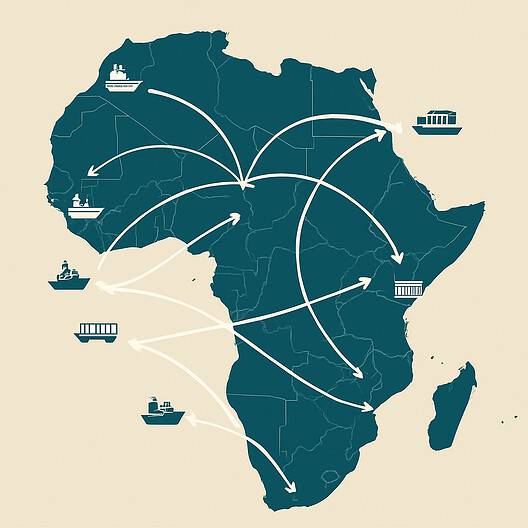
Historical Trade Networks That Connected Africa
Africa has always been a continent of movement, exchange, and economic interaction.
Long before modern highways, airports, and digital payment systems, African communities developed extensive trade networks that connected regions, kingdoms, and distant societies. These networks moved far more than goods. They also carried ideas, technologies, languages, cultures, and religious beliefs across the continent.
From the trans-Saharan routes linking West Africa with North Africa to the Indian Ocean networks connecting East Africa with Arabia and Asia, historical trade played an important role in shaping African societies. Understanding these networks provides valuable insight into the continent’s economic and cultural development.
The Trans-Saharan Trade Network
One of Africa’s most influential trading systems was the trans-Saharan trade network. It connected West African kingdoms with North Africa and Mediterranean markets.
Camel caravans became essential to this trade because they could travel long distances across the desert while carrying valuable goods. Traders transported gold, salt, leather, textiles, dates, spices, and other commodities between different regions.
West African empires such as Ghana Empire, Mali Empire, and Songhai Empire benefited significantly from these commercial connections.
Gold and Salt Shaped Regional Commerce
Gold from West African regions was one of the most valuable commodities in long-distance African trade. At the same time, salt was extremely important because it was necessary for food preservation and human health.
Trading centers developed around the movement of these resources. Cities such as Timbuktu, Gao, and Djenné became important commercial and intellectual centers.
The trade also generated tax revenue for powerful states. Governments that controlled important routes or commercial centers could benefit from customs duties and protection fees.
The Niger River Trade Network
Rivers also provided important transportation routes. The Niger River supported trade between communities across parts of West Africa.
Merchants could move agricultural products, fish, livestock, textiles, and manufactured goods along and around the river system. Important settlements grew near trading points, allowing commerce to connect inland communities with larger regional markets.
This network demonstrates that African trade did not depend entirely on long-distance caravans. Local and regional waterways were equally important to economic life.
The East African Indian Ocean Trade
On Africa’s eastern coast, another major network developed around the Indian Ocean. Coastal settlements interacted with merchants from Arabia, Persia, India, and other parts of Asia.
Swahili trading cities such as Kilwa, Mombasa, Malindi, and Zanzibar became important commercial centers. African merchants traded products including gold, ivory, animal skins, timber, and agricultural goods.
In return, imported goods such as textiles, ceramics, beads, and other manufactured products entered East African markets.
The seasonal monsoon winds made regular maritime trade possible. Sailors could plan journeys around changing wind patterns, creating a dependable commercial connection across the ocean.
The Swahili Coast as a Cultural Bridge
Trade along the East African coast produced more than economic growth. It encouraged cultural interaction and contributed to the development of Swahili society.
African, Arab, Persian, and Indian influences became visible in architecture, language, cuisine, clothing, and commercial practices. Swahili itself developed as a major language of communication along the coast.
Cities became multicultural spaces where merchants, sailors, artisans, farmers, and political leaders interacted.
Trade Routes Across Central Africa
Central African communities also developed regional trade networks. Rivers, forests, savannahs, and established paths connected different communities despite challenging geographical conditions.
Goods such as copper, iron products, salt, ivory, agricultural produce, and textiles moved between communities. Metalworking was particularly significant because iron tools and weapons supported farming, construction, and political power.
Trade therefore contributed to both economic activity and technological development.
The Great Lakes Trade Networks
The Great Lakes region supported another important network of exchange. Communities around lakes such as Lake Victoria, Lake Tanganyika, and Lake Malawi traded agricultural products, fish, livestock, salt, metals, and other resources.
Water transportation helped communities overcome difficult terrain and maintain relationships with distant settlements.
These networks also encouraged political and cultural connections between neighboring societies.
Trade and the Rise of African Cities
Many African cities grew because of their positions along important trade routes. Traders needed places to rest, store goods, exchange currencies or commodities, obtain supplies, and negotiate commercial agreements.
As a result, commercial settlements could develop into powerful political and cultural centers.
Timbuktu is one of the best-known examples. Its importance came not only from commerce but also from scholarship and education. Trade helped create the economic conditions that supported intellectual activity.
The Role of African Merchants
It is important to recognize that Africans were active participants in these networks rather than simply suppliers of resources to foreign traders.
African merchants organized caravans, negotiated prices, transported goods, established marketplaces, and developed relationships with trading partners.
Local rulers also played important roles by protecting routes, regulating markets, collecting taxes, and maintaining political stability.
Trade Spread Ideas and Technology
Historical trade networks connected people who lived hundreds or even thousands of kilometers apart. As merchants traveled, they carried knowledge with them.
Agricultural techniques, navigation skills, metalworking practices, architectural ideas, writing traditions, religious beliefs, and commercial systems could spread between communities.
This exchange contributed to the cultural diversity found across Africa today.
Lessons for Modern African Trade
Historical trade networks provide useful lessons for modern economic integration. They demonstrate that African communities have long participated in regional and international commerce.
Modern roads, railways, ports, airports, digital marketplaces, and payment systems can build on this tradition by making it easier for businesses to reach customers across borders.
Regional cooperation can also reduce barriers that make cross-border commerce unnecessarily difficult.
Conclusion
Historical trade networks connected Africa through deserts, rivers, forests, savannahs, and oceans. They supported the growth of powerful kingdoms, prosperous cities, specialized industries, and diverse cultural communities.
From trans-Saharan caravans to Indian Ocean shipping routes, these networks reveal a long history of African entrepreneurship and international exchange. Their legacy remains relevant today as African countries continue working toward stronger regional trade and economic integration.




Leave a reply







Africa’s Source for Breaking News | Entertainments | Health | Finance | Sports | Lifestyle and Business News.


